
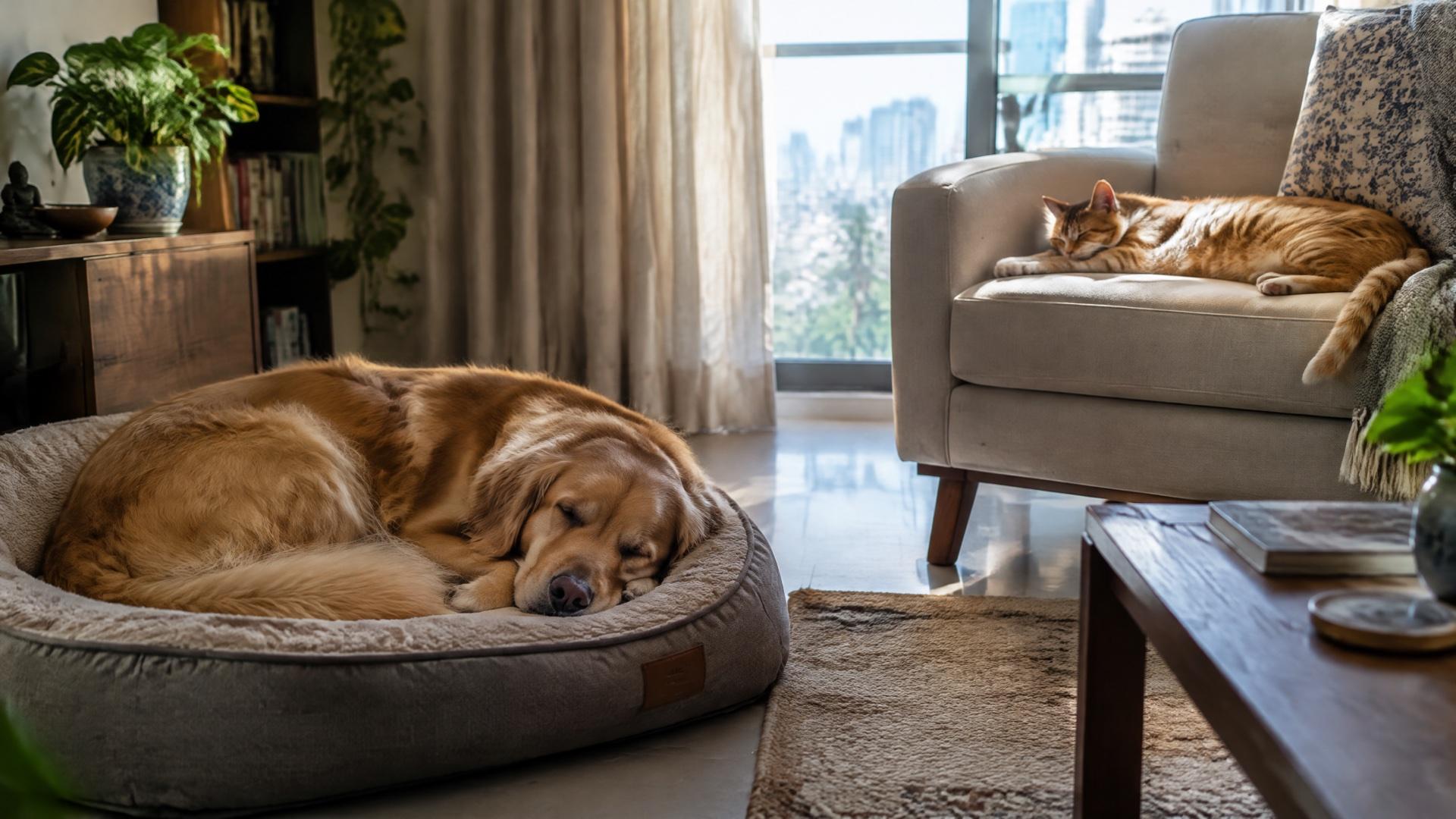
Dogs and cats sleep a lot because long sleep is normal for them: expert sources say puppies may sleep 18 to 20 hours a day, adult dogs anywhere from 8 to 16 or more hours, and adult cats around 12 to 18 hours, with cats using sleep to save energy for hunting. For pet parents in a Mumbai flat, a dog dozing all afternoon or a cat napping through a monsoon downpour can still look worrying. Why do dogs sleep so much, and how much do cats sleep? This guide answers both and explains when sleepiness is a reason to call your vet.
Key Takeaways
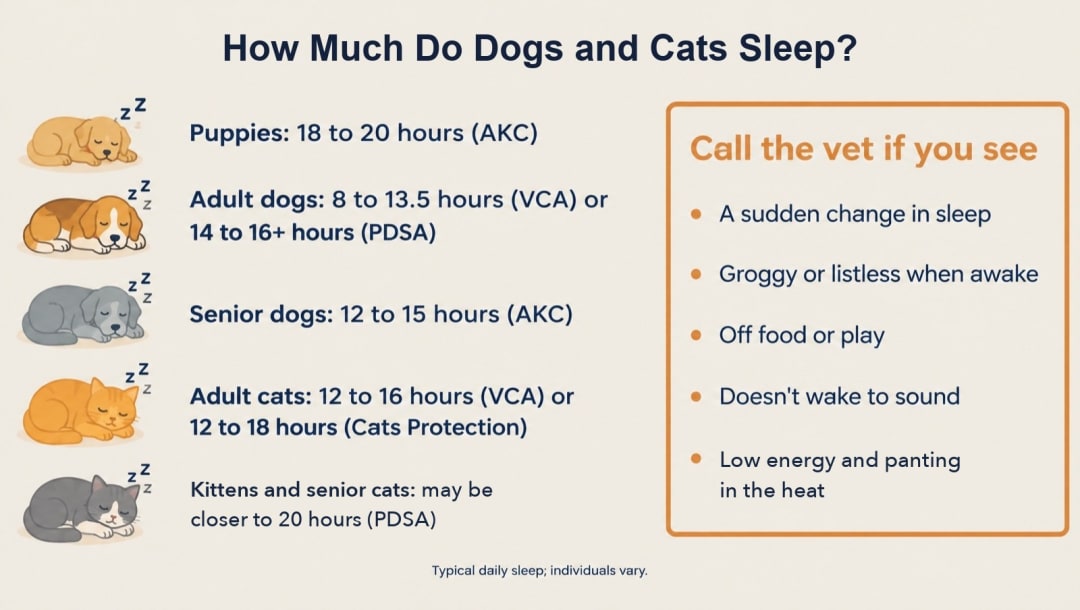
Puppies may sleep 18 to 20 hours a day, and kittens and senior cats may sleep closer to 20.
Adult figures vary by source: between 8 and 16 or more hours for dogs, and 12 to 18 hours for cats.
A notable shift in your pet's sleep pattern matters more than the total number of hours.
If your pet loses interest in food or play, or seems groggy when awake, see your vet.
How Many Hours a Day Do Dogs Sleep?
Adult dogs sleep somewhere between 8 and 16 or more hours a day, depending on the source, and puppies and older dogs need more.
VCA Animal Hospitals, a US network of vet hospitals, says in its guide to whether your pet is sleeping too much that "dogs sleep between 8 and 13.5 hours per day". The PDSA, a UK vet charity, gives a higher figure in its tips on dogs and sleep: "Evidence suggests most dogs need between 14 to 16 hours or more of sleep in a 24-hour period, however there will be some variation between individuals."
Puppies
The AKC (American Kennel Club), a US breed registry that publishes dog-care advice, says in its guide to how much puppies sleep that puppies "usually sleep from 18 to 20 hours a day". VCA's page on puppy sleep says a 2-month-old puppy's bursts of energy take up "around 4 to 6 hours of the day".
New puppy? Our guide to vet visits in your puppy's first year covers the checks to expect.
Senior Dogs
Older dogs need more rest too, though source figures don't line up neatly. According to the AKC's article on senior dog sleep, "Most geriatric dogs require 12 to 15 hours of sleep a day." That overlaps the top of VCA's adult range and the bottom of the PDSA's, so compare your dog with its own usual pattern.
Why Do Dogs Sleep So Much?
Dogs sleep so much partly because they get little dreaming (REM) sleep, so they need more sleep overall. In its explainer on why dogs sleep so much, the AKC says: "Dogs only spend about 10% of their snoozing time in REM because of their irregular sleep patterns." As a result, "dogs require more total sleep to compensate for their lost REM."
It gives a few more reasons:
Dogs doze "often out of boredom".
"Older dogs require more sleep just because they tire out more easily".
"bigger breeds also spend more time dozing."
Overall, the AKC says dogs "tend to spend as much as half of their days asleep", with 30 per cent awake but relaxing and just 20 per cent being active.
Is It Normal for a Dog to Sleep All Day?
Long daily sleep is normal for many dogs, but sleeping for over 20 hours a day or a notable change in pattern can signal a problem. AKC chief veterinarian Dr Jerry Klein says "dogs sleeping for over 20 hours of the day, or more importantly, having a notable shift in their sleeping patterns, could be a sign of an underlying medical condition."
How Many Hours a Day Do Cats Sleep?
Adult cats sleep around 12 to 18 hours a day, depending on the source, so a cat that naps for much of the day is normal.
VCA: "cats clock a whopping 12 to 16 hours of shut-eye a day".
Cats Protection, a UK cat charity, in its facts about cats and sleep: "Domestic cats sleep for 12-18 hours a day".
The PDSA, in its blog on why cats sleep so much: "On average, cats sleep 15 hours a day, though some cats may spend up to 20 hours asleep."
The Merck Veterinary Manual's section on cat behaviour, a reference book for vets, gives a lower share: "They sleep 40% of the day, rest 22% of the day, and groom 15% of the day."
Kittens and older cats sleep more. The PDSA says: "As kittens and senior cats need more shuteye than adult cats, they may spend closer to 20 hours sleeping each day."
Why Do Cats Sleep So Much?
Cats sleep so much to rebuild and save energy for hunting. The PDSA explains that sleep is "the only way to build their energy levels back up and to conserve their energy for the next hunt".
Dawn and Dusk Activity
"Cats are crepuscular, meaning they're most active at dusk and dawn, which is all down to their hunting instinct," the PDSA says. Cats Protection adds that they favour "sleep during midday and in the dark of night".
Short Naps and Deep Sleep
"Cats will usually sleep in several short bursts rather than one long sleep," according to the PDSA. A light sleep "will often last between 15 and 30 minutes before they settle down into deep sleep", and then "cats are much harder to wake up."
Rainy Days
If your cat seems sleepier in the monsoon, Cats Protection says: "Don't be surprised if your feline friend seems sleepier on rainy or dark days."
Why Is My Cat Sleeping So Much All of a Sudden?
A sudden rise in sleep can be a sign of a health problem, so book a vet check. The PDSA warns that "A sudden change in their sleeping pattern or excessive napping can be a sign of an underlying health condition".
It also advises seeing a vet if your cat "doesn't want to engage in pleasurable activities (e.g. petting, feeding, or playtime)".
Why Does My Dog Sleep So Much When It's Hot?
Our expert sources don't say heat makes a healthy dog sleep more, but low energy in hot weather can be a mild sign of heatstroke. The PDSA's guide to heatstroke in pets lists these mild signs:
"Panting"
"Fast breathing/difficulty breathing"
"Lethargy (low energy)"
The charity says "Obese, brachycephalic (flat-faced), young, elderly, giant breed, and long-haired dogs are most at risk of heatstroke." If you spot the signs, "Call your vet as soon as possible."
For keeping pets cool, see our guide to pet care in summer in India.
How Can You Help Your Pet Sleep Well?
A quiet bed, less boredom and a close eye on changes all help your pet sleep well.
1. Set Up a Quiet Bed
The PDSA recommends "Having a bed or safe comfortable space in a quiet area where they won't be disturbed." If noise or visitors unsettle your pet, our guide to calming an anxious dog or cat has more on safe spaces.
2. Keep Boredom in Check
The AKC says dogs often doze out of boredom, and the PDSA says of cats: "If you're worried your cat sleeps too much, it may be down to boredom." Our advice: short play sessions through the day give a bored pet something to do.
3. Note Any Changes in Routine
Dr Klein advises: "If their regular routine starts to shift, owners should make a note and consult with their veterinarian". VCA agrees that "a change in routine may signal a problem."
Common Mistakes to Avoid
Avoid these mistakes.
Comparing your pet with one "normal" number, when expert sources give different ranges.
Putting a sudden change in sleep down to age without a vet check.
Ignoring low energy and panting on a hot day.
Disturbing a resting dog in its bed or safe space.
When Should You Call a Vet About Your Pet's Sleep?
Call your vet if your pet's sleep pattern changes suddenly or comes with other signs. The AKC says "Excessive sleep can signal conditions such as canine depression, diabetes, hypothyroidism, and possible loss of hearing." VCA's puppy guide warns that "excessive tiredness or lethargy can be a sign of a medical condition."
See a vet if your dog or cat:
sleeps much more or less than usual, or the pattern shifts suddenly
seems groggy or listless when awake
"doesn't seem interested in meals, isn't as active, or seemingly ignores you" (AKC)
doesn't wake to sound, a sign the AKC lists for senior dogs
snores excessively, which VCA's puppy guide lists among the warning signs
has vomiting, coughing or hair loss along with sleep changes, which VCA says "should always be checked out"
Can a Sleepy or Senior Pet Be Groomed at Home in Mumbai?
Yes: a home groom means no cage and no car ride. FurDial's groomers come to your home across Mumbai, Thane, Navi Mumbai and Vasai-Virar, and every groomer has 5+ years of experience.
If your pet is anxious or aggressive, mention it in the booking note: the groomer may pause or reschedule if that is safer.
For dogs, The Clean Aesthetic (₹1,699, about 90 minutes) is the shortest dog groom. For cats, The Glow Up (₹1,199, about 45 minutes) is a dry bath with no water or dryer. Prices include GST, with no travel charge. Only pets with up-to-date core vaccinations can be groomed. See all grooming packages and prices.
A groomer is not a vet, so book a vet check first if your pet's sleep has changed.
Frequently Asked Questions
Are Dogs That Sleep a Lot Happy?
Sleep alone doesn't show whether a dog is happy; how it seems when awake matters more. VCA says a pet should be "energetic and bright when awake and not groggy or listless."
Should I Let My Dog Sleep as Much as He Wants?
Yes, let a healthy dog rest; the PDSA advises that everyone at home knows not to disturb a dog in its safe space. Too little sleep matters too: the PDSA says "dogs who get less than ten hours of sleep a day may be more likely to show confrontational behaviours".
Do Cats Sleep for 70% of Their Lives?
We couldn't find an expert source for a 70 per cent figure. The PDSA says "Cats can spend over half of their lives asleep." International Cat Care (iCatCare), an international cat welfare charity, says in its guide to what makes a cat a cat that "cats may sleep for two-thirds of the day".
Are Cats Happier If They Sleep With You?
Cats Protection doesn't say it makes them happier, but in its blog on why cats sleep on their owners it explains that "they can share your body heat to keep warm", and: "If they are happy to cuddle up to you, it shows that they trust you and see you as a friend."
Final Thoughts
Long sleep is normal for dogs and cats, so watch for change rather than counting hours. If sleep shifts suddenly or your pet seems listless, call your vet.
When it's time for a groom, skip the car ride: book a FurDial groom at home and mention any anxiety in the booking note.