
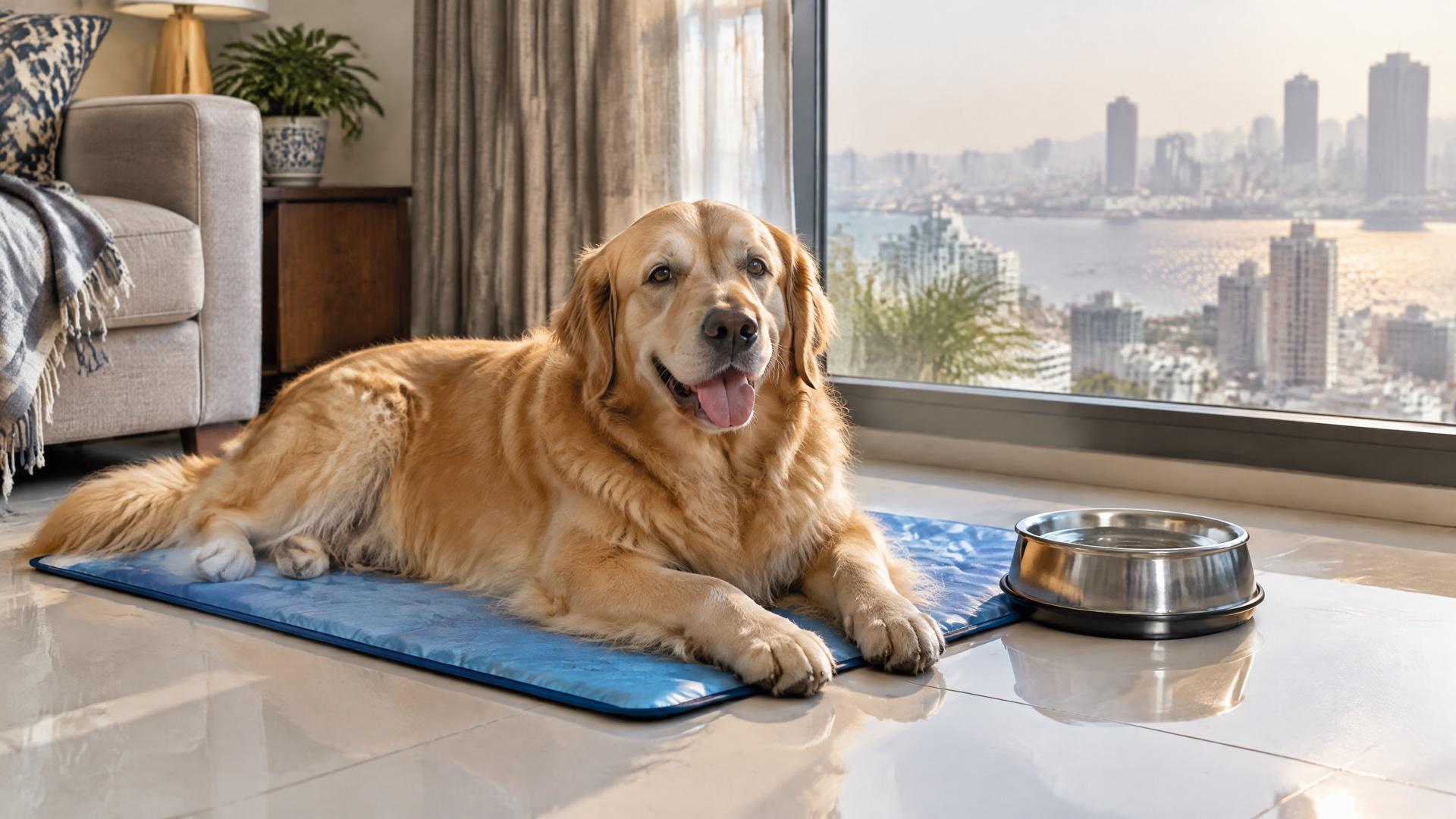
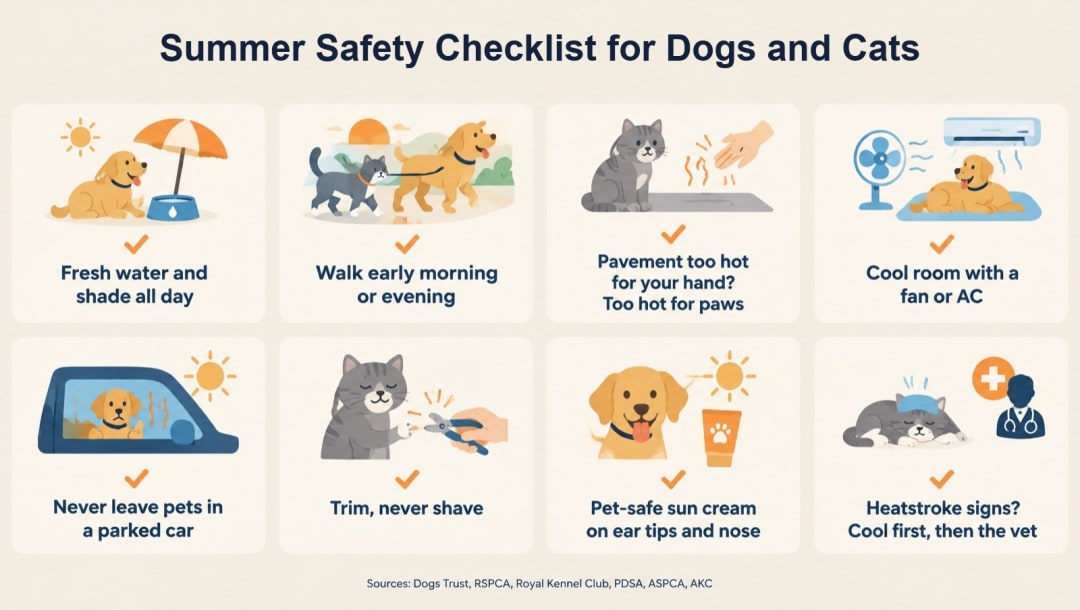
To keep dogs and cats cool in summer, give them shade and fresh water all day, walk dogs only in the early morning or evening, keep them in a cool room with a fan or AC, trim long coats instead of shaving them, and never leave them in a parked car. In Mumbai, the hot, sticky weeks before the monsoon are hard on pets as well as people. This guide explains how to keep dogs cool in summer, how to help cats through the heat, and what to do if your pet overheats.
Key Takeaways
Dogs and cats cool down mainly by panting, which works less well when the air is humid.
Flat-faced, thick-coated, young, old and overweight pets are most at risk.
Trim long coats if needed, but never shave a dog's coat to cool it down.
If you spot signs of heatstroke, start cooling your pet straight away and call your vet.
How Do I Keep My Dog Cool in Extreme Hot Weather?
Give your dog shade, plenty of fresh water and a cool place to rest, and move walks to the coolest parts of the day. Dogs Trust, a UK dog welfare charity, says in its hot weather advice for dog owners: "Make sure your dog has access to shade and plenty of fresh water throughout the day."
For pet parents in a Mumbai summer, that means water and shade at all times, walks only when it is cooler, a cool room with moving air, a tangle-free coat and no parked cars.
Why Do Dogs and Cats Struggle in Humid Heat?
Dogs and cats can't sweat much, so they rely on panting, and panting cools them less well in humid air. The Texas A&M College of Veterinary Medicine, a US vet school, explains in its article on keeping your pet safe as temperatures rise that dogs and cats "can only sweat through the bottoms of their feet, so they must expel heat by panting."
It also warns that "Once the humidity in the air reaches about 85 percent, evaporative cooling is almost totally inhibited." Dogs Trust makes the same point: "Panting is less efficient than sweating, especially when it is humid."
Which Pets Are Most at Risk in the Heat?
Flat-faced breeds, thick-coated dogs, puppies, older pets, overweight pets and pets with heart or breathing problems are most at risk. The RSPCA, a UK animal welfare charity, lists dogs with thick coats, puppies, senior dogs, flat-faced breeds and dogs with breathing conditions in its guide to heatstroke in dogs.
The ASPCA, a US animal welfare charity, says in its hot weather safety tips that "animals with flat faces, like Pugs and Persian cats, are more susceptible to heat stroke."
If you share your home with a thick-coated breed, our guide to Husky grooming in Mumbai's heat covers double coats in detail.
When Is the Best Time to Walk a Dog in Summer?
Walk your dog in the early morning or evening, and skip the midday sun. The Royal Kennel Club, the UK's dog registry, gives the same timing in its advice on hot pavements and your dog's paws: "Avoid walking in the midday sun."
Place the back of your hand on the pavement and hold it there for several seconds (the Royal Kennel Club says seven, Dogs Trust says five). If it is too hot for your hand, it is too hot for your dog's paws. Walk on grass where you can.
According to the RSPCA, "Dogs are 10 times more likely to experience heat-related illnesses when out in hot weather than overheating in cars."
How Do I Reduce My Dog's Body Heat?
Keep your dog in a cool, shaded room with moving air, and offer a cool surface to lie on. The PDSA, a UK vet charity, says in its 2026 advice on helping pets in the heat: "Use fans or air conditioning to keep the air moving and fresh."
The PDSA also suggests:
Cooling mats. "You could also consider laying down a cooling mat." Supervise your dog so it doesn't chew it.
Frozen treats as an extra only. The PDSA says "frozen treats alone won't prevent overheating", so keep up the shade and water.
Crushed ice, not cubes. The PDSA says "it's best to avoid giving them solid ice cubes, as these can fracture teeth." Crushed ice or a frozen block of water is safer.
Our advice: in a Mumbai flat, a shaded room with moving air and a cooling mat makes a good daytime resting spot.
Should You Shave Your Dog in Summer?
No. Trim long hair if needed, but don't shave your dog's coat. The ASPCA says to "never shave your dog" and explains: "The layers of dogs' coats protect them from overheating and sunburn."
The AKC (American Kennel Club), a US breed registry, says in its article on whether to shave your dog in summer that shaving "eliminates that insulating layer of fur." Even for single-coated dogs, it says "The coats should not be shaved down to the skin." What helps instead:
Regular brushing, which "allows for better air circulation in their coat," according to the AKC.
A tangle-free coat. The PDSA says "a tangle-free coat will allow your dog's skin to breathe better."
Trimming excess paw fur, which the AKC says "can help the sweat evaporate and cool them off."
For curly coats, our guide to Poodle haircut styles for Mumbai's climate explains which cuts suit the heat.
How Do I Keep My Cat Cool in Summer?
Give your cat fresh water in several places, cool shaded spots indoors, and extra brushing. Cats Protection, a UK cat welfare charity, says in its guide to heatstroke in cats: "Offer plenty of fresh water at all times."
The PDSA's tips for keeping your cat cool suggest several water bowls, closed curtains, cold ceramic tiles or a cooling mat to lie on, and fans kept out of reach.
According to the ASPCA, "Brushing cats more often than usual can prevent problems caused by excessive heat."
Cats Protection lists heatstroke signs in cats as restlessness, fast breathing or panting, drooling, confusion, vomiting, diarrhoea and collapse. It advises wetting the coat "with lukewarm water", cooling gradually, and says "Heatstroke is an emergency." Contact your vet as soon as possible.
Can Dogs and Cats Get Sunburn?
Yes, pets with light-coloured coats or exposed skin can burn, especially on the ears and nose. The PDSA says white or ginger cats are especially at risk on the ears and nose. Dogs Trust advises: "Use pet-safe sun cream on exposed parts of your dog's skin, like the tips of their ears and nose."
The ASPCA says any sunscreen must be "labeled specifically for use on animals", so ask your vet which one to use.
What Is the Quickest Way to Cool Down an Overheated Dog?
Stop all activity, move your dog somewhere cool, pour cool (not ice-cold) water over its body, and call your vet. Noisy or fast breathing, thick sticky drool, red gums, confusion, vomiting or collapse are warning signs, according to the RSPCA.
1. Stop and Move to Shade
According to the RSPCA, the first step is to stop exercise and move your dog into shade.
2. Pour Cool Water Over the Body
Dogs Trust says: "Use any water available, provided it is cooler than your dog." The RSPCA says to pour it over the neck, stomach and thighs. VCA Animal Hospitals, a US network of vet hospitals, says in its guide to heat stroke in dogs: "Ice packs and rubbing alcohol are no longer recommended as a method to promote temperature reduction."
3. Use Moving Air, Not a Wet Towel on Top
VCA suggests placing your dog "in the path of a fan or air conditioning to promote cooling." Dogs Trust says to stop cooling if your dog starts shivering. Wet towels can go under your dog, but the RSPCA warns: "Don't place damp towels directly over the dog's body, as this can trap heat and worsen their condition."
4. Get to a Vet
The RSPCA's rule is "Cool first, transport second." Call the vet ahead so the clinic knows you are coming.
Common Mistakes to Avoid
Walking your dog at midday or on hot pavements.
Leaving a pet in a parked car, even briefly or with a window open.
Shaving a dog's coat down to the skin.
Using ice packs or a wet towel on top of an overheated dog.
Using human sun cream on your pet.
When Should You Call a Groomer or a Vet?
Call a vet at once if your pet shows any sign of heatstroke, and book a groomer when a long or thick coat needs brushing out or a tidy trim.
Call a vet straight away if:
your pet is panting heavily even after resting, drooling thickly, confused, vomiting or collapsing
your dog's paws look red, swollen or blistered after a walk
your pet is flat-faced, old or unwell and struggling in the heat
A groomer can help with dead undercoat, tangles and long coats that need a trim, but a groomer is not a vet.
How Can a Groomer Help Your Pet in Mumbai's Summer?
A groomer can strip out dead undercoat, clear tangles and trim long coats so air reaches the skin. FurDial's groomers come to your home across Mumbai, Thane, Navi Mumbai and Vasai-Virar, so there is no cage and no car ride in the heat. Every groomer has 5+ years of experience.
The Full Flex, ₹2,399, about 120 minutes, includes de-shedding (a deeper pass to strip out dead undercoat that ordinary brushing leaves behind) and de-matting, plus everything in Drip & Trim.
Drip & Trim, ₹1,999, about 120 minutes, includes a full body haircut agreed before starting. For double-coated breeds, ask for a trim, not a zero cut. Coat condition decides what is achievable.
Both include a blow dry right down to the skin and a brush out.
Prices include GST, with no travel charge. Only pets with up-to-date core vaccinations can be groomed. See all grooming packages and prices.
Frequently Asked Questions
Is It Safe to Leave a Dog in a Car With the Window Open?
No. Dogs Trust says "A dog could die in a hot car in just minutes" and "Winding a window down is not enough to help your dog stay cool."
Does My Dog Need AC in Summer?
AC is not a rule, but moving, cool air helps. The PDSA suggests fans or air conditioning, and the ASPCA says at-risk pets are ideally kept in air-conditioned rooms.
Is It Safe to Leave My Pet Home Alone in the Heat?
Only in a room that stays cool. The PDSA says to "never leave pets in a hot car, caravan, tent or areas of the house that might heat up quickly." Leave fresh water and shade, and keep fans out of reach of cats.
Final Thoughts
Knowing how to keep dogs cool in summer comes down to water, shade, cool walks, a cool room, a brushed coat and never a parked car. Cats need the same care. If your pet shows signs of heatstroke, cool it first and call your vet.
When your pet's coat needs a de-shed or a summer trim, book a FurDial groom at home.