
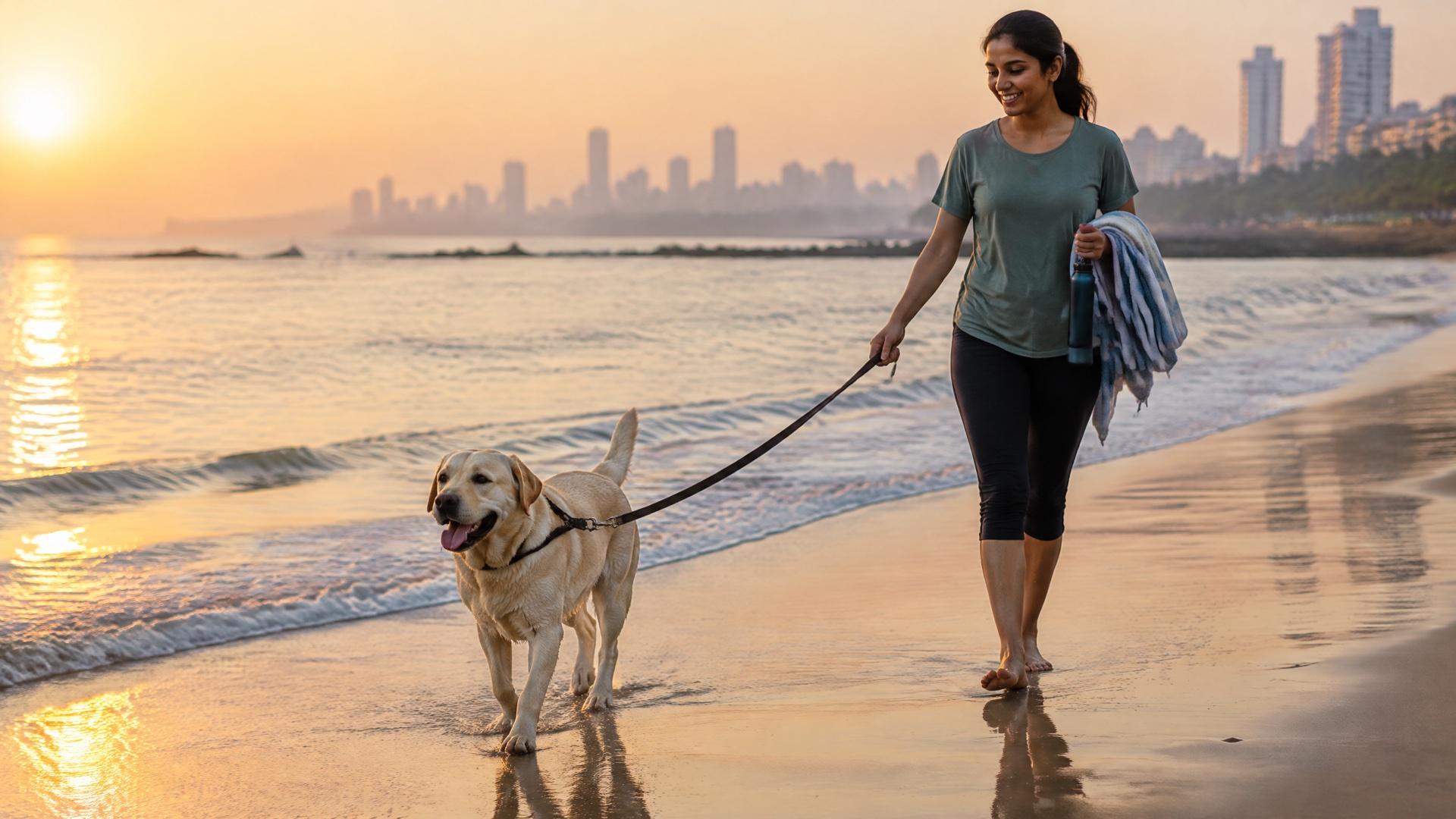
Yes, you can take your dog to the beach, as long as you go in the cooler hours, bring shade and fresh water, stop your dog drinking seawater, keep a close eye on the sea and rinse the salt and sand off afterwards. In Mumbai, an early walk on the sand is tempting, but heat, high tides and local rules all need checking before you set off. These taking dog to beach tips come from UK vet and animal welfare charities and the American Kennel Club, and cover what pet parents should pack and watch for.
Key Takeaways
Go early in the morning or later in the evening, and give your dog shade and fresh water.
Seawater can make dogs sick, so carry tap water and a bowl.
Never force your dog into the sea, and never go in after a dog in trouble.
Rinse sand and seawater off the coat and paws with tap water when you get home.
Is It Okay for Dogs to Be at the Beach?
Yes, it is okay for dogs to be at the beach if you plan for the heat, the water and the sand. The PDSA, a UK vet charity, says in its blog on keeping your dog safe at the beach that "Swimming is a great exercise for dogs and can help them cool down on a hot day."
The same guide flags the risks: seawater, sand, heat, currents and sharp objects that "can cut the pad of your dog's paw if stepped on."
Can You Take Your Dog to the Beach in Mumbai?
There is no city-wide answer: we could not find an official rule from the Brihanmumbai Municipal Corporation (BMC) or Mumbai Police that allows or bans dogs on the city's beaches. Rules can vary by place and change, so check local signs and notices before you go.
Check sea conditions too. During a high-tide spell in December 2025, the BMC "has appealed to the people to avoid visiting the seashore in the city," according to a Press Trust of India report on the high-tide advisory.
In the rains, read our monsoon pet care guide for Mumbai first.
Wherever you go, the PDSA says to "always clean up and remove the waste after your pup".
What Should I Bring to the Beach With My Dog?
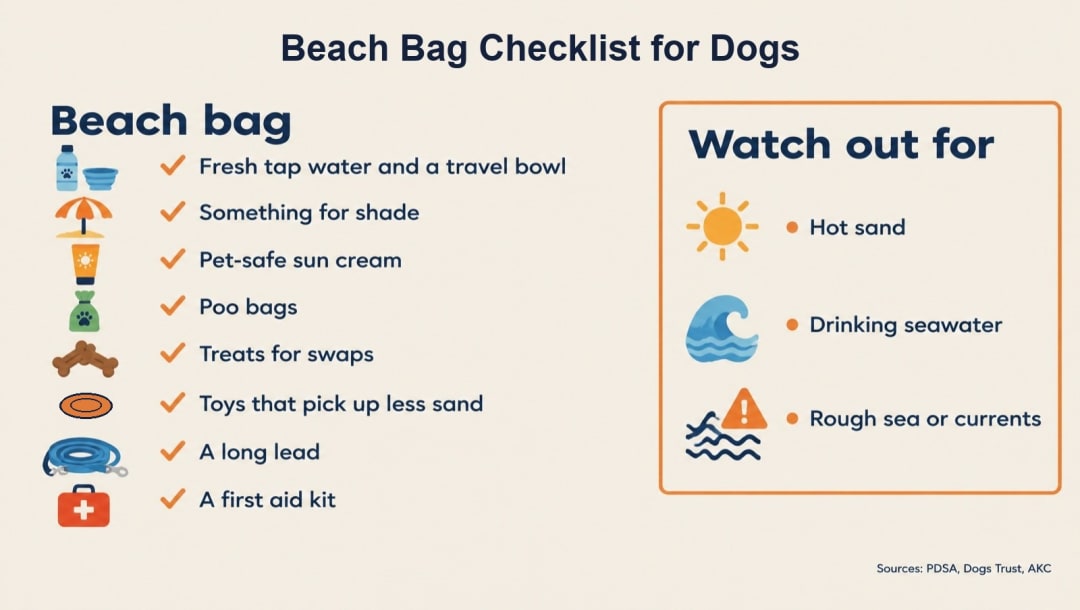
Bring fresh tap water and a bowl, shade, pet-safe sun cream, poo bags, treats, toys, a lead and a first aid kit. The PDSA advises: "Always take plenty of fresh tap water, along with a travel bowl" so your dog isn't tempted to drink from rock pools, puddles or the sea.
Dogs Trust, a UK dog welfare charity, wrote its beach safety advice with the RNLI, the UK sea rescue charity. It says: "Bring some treats so you can swap unsuitable items your dog picks up for a safe snack."
Pack this checklist:
Fresh tap water and a travel bowl
Something for shade
Pet-safe sun cream
Poo bags
Treats for swaps
Toys that pick up less sand
A lead, ideally a long one
A first aid kit
Is It Safe to Take Your Dog to the Beach in Hot Weather?
It can be, if you avoid the hottest part of the day and give your dog shade and water. The PDSA says: "In the height of summer, avoid visiting the beach during the hottest part of the day", adding that "early mornings and later on in the evenings are best".
Test the sand. In its guide to taking your dog to the beach, the American Kennel Club (AKC), the US breed registry, warns: "Especially midday, sand can get blisteringly hot and can burn your dog's paw pads." Dogs Trust says: "Make sure you can stand comfortably barefoot before you let their paws do the same." Walking along the water's edge is another option the AKC suggests.
Give shade and water. Dogs Trust says to "Provide shade and fresh drinking water for your dog all day".
Protect noses and ears. "Dogs can suffer from sunburn, so use pet-safe sunscreen on your dog's nose, ears, and any other areas with sparse fur," the AKC advises.
Know heatstroke signs. The RSPCA, a UK animal welfare charity, lists signs of heatstroke in dogs including heavy panting, red gums and tongue, vomiting and collapse. Move your dog into shade, pour cool water over the neck, stomach and thighs, then call ahead and get to a vet: cool first, then transport.
For more on the heat, see our guide to pet care in summer in India.
Can Dogs Drink Seawater?
No, dogs should not drink seawater. Dogs Trust says: "Dogs shouldn't drink sea water (no matter how tasty) as it can cause sickness and saltwater poisoning."
The PDSA warns that "Drinking salty sea water can give your dog a nasty bout of sickness and/or diarrhoea", adding that it "in some cases can make them seriously ill and dehydrated."
Is It Safe for Dogs to Swim in the Sea?
It can be, with constant supervision and suitable conditions, but even a calm sea can hide dangers. The PDSA warns: "There are lots of strong currents, undertows and rip currents, and even a calm looking sea can have hidden dangers."
Let your dog choose. "Never force your dog into the sea, let them decide if they want to take a dip," says the PDSA.
Supervise every swim. The AKC says "even experienced dogs need constant supervision while they're in the water," and that "your dog can easily overtire."
Check the conditions. The PDSA suggests you "check whether the beach has a lifeguard on duty", and notes that "a red flag or a sign showing a white circle with a red line through it means you shouldn't swim".
If your dog gets into trouble, Dogs Trust and the RNLI say: "If your dog goes into the water, over a cliff edge or gets stuck in mud, don't go after them." Instead, "Move to a place your dog can reach safely and call them."
Can You Take a Puppy to the Beach?
Yes, but wait until your vet confirms the timing after your puppy's primary vaccination course. Dogs Trust's guide to a puppy's first walk says: "Your puppy can typically go on their first walk one to two weeks after they have completed their primary vaccination course."
It also states: "A puppy should not be walked outside if they have only had a single vaccination." The RSPCA lists puppies among the dogs at higher risk of heatstroke. See our guide to puppy vet visits in the first year.
How Do You Take Your Dog to the Beach for the First Time?
Keep the first visit short, quiet and on a lead, and let your dog set the pace.
1. Pick a Quiet Time
The AKC says: "Start with a short visit during a quiet time of day."
2. Keep Your Dog on a Lead
The AKC advises keeping your dog on a lead, letting them explore gradually and rewarding calm behaviour. Dogs Trust says to keep your dog on a lead on the beach "if your dog hasn't mastered recall", and adds a tip: "long leads will let them explore the beach safely."
3. Let Them Meet the Water Slowly
"If your dog is new to the water, teach them to swim at their own pace," says the AKC.
4. Leave Before They Are Overwhelmed
The AKC's advice is to "Stay close, watch their comfort level, and end the visit before they become overwhelmed."
What Should You Do After Taking Your Dog to the Beach?
Rinse your dog with fresh water and check the paws. Dogs Trust says to "rinse any sand and seawater off their coat and paws with tap water", which stops it building up and causing irritation. The PDSA's reason is "to prevent them licking any salt from their fur."
If you find a cut pad, the PDSA says to wash it well with fresh water.
Common Mistakes to Avoid
Avoid these five mistakes.
Going at midday, when the sand can burn paw pads.
Forgetting fresh water, so your dog drinks from the sea or rock pools.
Forcing a nervous dog into the water.
Going into the sea after a dog in difficulty.
Skipping the rinse, so salt and sand stay in the coat.
When to Call a Groomer or a Vet
Call a vet if your dog shows signs of heatstroke, is sick after drinking seawater, has swallowed sand, seaweed or plastic, or has a cut pad you are worried about.
A groomer is not a vet: book a groom once your dog is well.
At-Home Grooming After a Beach Day
After a beach trip, a groomer can bath your dog and blow dry the coat right down to the skin. FurDial's groomers come to your home across Mumbai, Thane, Navi Mumbai and Vasai-Virar, so there is no cage and no car ride. Every groomer has 5+ years of experience.
The Clean Aesthetic (₹1,699, about 90 minutes) includes a deep conditioning bath, a blow dry right down to the skin, a brush out (pulls out loose undercoat and catches small tangles), nail clipping and filing (nails trimmed to a safe length and edges smoothed), ear cleaning (outer ear), paw cleaning (pads checked) and eye cleaning.
Drip & Trim (₹1,999, about 120 minutes) includes everything in The Clean Aesthetic, plus a full body haircut (zero cut, trim or styled finish agreed before starting; coat condition decides what is achievable), a hygiene cut (underface and sanitary areas) and a finishing perfume (can be skipped).
The Full Flex (₹2,399, about 120 minutes) includes everything in Drip & Trim, plus anti-tick and flea treatment (grooming treatments, not a cure; heavy infestations need a vet), de-shedding, a calming massage and de-matting, with tangles worked out by hand where that is kinder than clipping. A small surcharge may apply for heavy matting, and you are told on arrival before the groomer starts.
Prices include GST, with no travel charge, and you can pay after the service by UPI or cash, or pay online. Only dogs with up-to-date core vaccinations can be groomed.
Frequently Asked Questions
Can Dogs Eat Sand at the Beach?
No. The PDSA says "eating and swallowing sand can actually cause stomach problems for your dog", and that discouraging your dog from eating or chewing sand while it digs or plays can help prevent the risk. The AKC warns that sand "can block your dog's intestines, causing an impaction."
Can I Leave My Dog in the Car at the Beach?
No. Dogs Trust's beach advice says: "Dogs should never be left alone in cars."
Should My Dog Wear a Life Jacket in the Sea?
The AKC says yes for some dogs: "A life jacket is recommended, especially for inexperienced swimmers or in areas with waves or currents."
Final Thoughts
Go when it is cool, pack fresh water, shade and sun cream, keep your dog on a lead and out of rough water, and rinse off the salt and sand afterwards.
Back home with a salty, sandy dog? Book a FurDial groom at home for a bath and blow dry right down to the skin.