
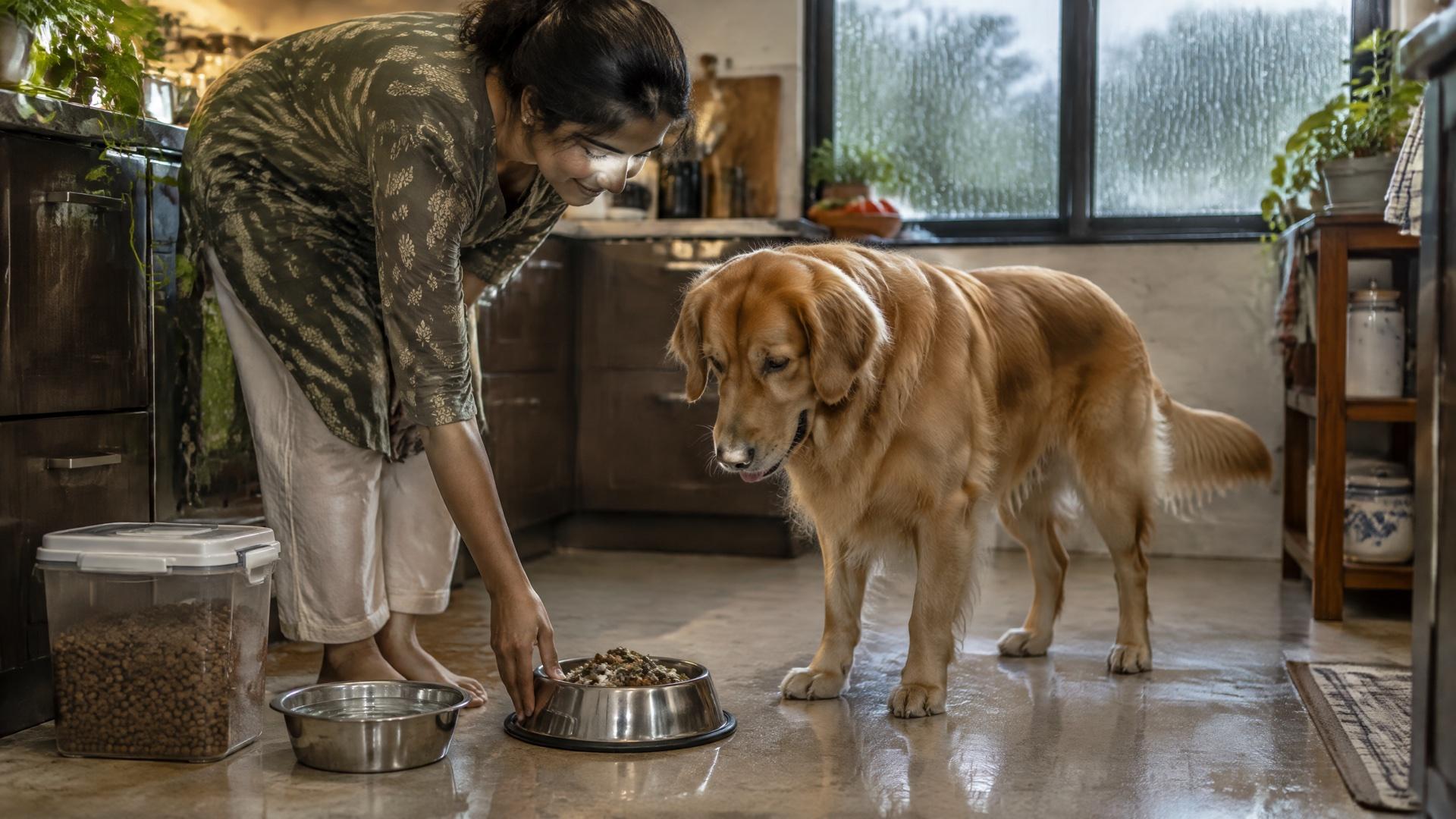
Vet sources don't name a single food that boosts a dog's immunity: they say the best support for your dog's immune health is an appropriate, complete and balanced diet, with any extras kept small and any supplements discussed with your vet first. In Mumbai, the monsoon means damp cupboards, wet walks and plenty of advice online about what to feed your dog. This guide sets out what vet bodies and vet schools actually say about immunity food for dogs, and how pet parents can keep food and water safe through the rainy season.
Key Takeaways
A complete and balanced diet is the base of your dog's immune health; no vet source we found names a food that gives instant immunity.
WSAVA says treats should make up less than 10 per cent of daily calories; Cornell says no more than 10 per cent of the diet should be extras.
Check with your vet before adding vitamins, minerals or any other supplement.
In the monsoon, store dry food cool and dry, promptly refrigerate or bin wet-food leftovers, and wash water bowls daily.
What Foods Boost Dogs' Immune System?
Vet sources don't name a single food that boosts a dog's immune system; they point to a complete and balanced diet. The Cornell University College of Veterinary Medicine, a US vet school, asks the question in its article on diets to boost immunity: "Can a change in diet improve your dog's immune status? The answer is a very qualified "maybe.""
Dr John Loftus, an assistant professor of small animal medicine and of nutrition at Cornell, adds that "Most pet foods are formulated to have more than adequate amounts of nutrients for normal immune function".
Cornell's conclusion is plain: "The bottom line for supporting the immune health for your dog is to feed them an appropriate, balanced and complete diet."
What About Fruit and Vegetables?
With that "maybe" in mind, Cornell lists some fresh foods: "Pro-immunity extras include red-bell peppers, berries (such as strawberries and blueberries), as well as spinach, carrots or kale."
But it sets a 10 per cent limit: "no more than 10% of their diet should be "extras," or else you may destroy the balance of their diet." Treat these as small extras, not as proven immune boosters. For safe ways to prepare them, see our guide to human foods dogs can and can't eat.
What Are Some Good Immune Boosters for Dogs?
Vet sources don't recommend any home immune booster without your vet's advice. Loftus says some nutrients "like vitamin D, can be supplemented in excess, so I don't recommend supplementing additional vitamins or minerals without checking with a vet."
Cornell also warns that "Over-supplementing can create problems instead of solving them" and that "Many supplements are not backed by evidence-based medicine, although many still have extensive anecdotal support."
Its advice: "If you feel that your dog needs immune support beyond this level, consult your veterinarian."
What Should I Feed My Dog in the Monsoon?
Keep feeding a complete and balanced diet in the monsoon, the same base vet sources recommend all year. The World Small Animal Veterinary Association (WSAVA), a global body of vet associations, says in its guide to feeding treats to your dog that "every dog needs a complete and balanced diet."
Read the label, not the marketing. WSAVA's guidelines on selecting pet foods say "Foods should be labeled to indicate if they provide a "complete" diet with all required nutrients." Words "such as 'holistic' or 'premium'" are, it says, "of little practical value for nutritional assessment."
Its global nutrition guidelines page adds that "the ingredient list gives no information on the quality of the ingredients".
If you cook at home, Cornell says: "If you choose to cook for your dog, consult a veterinary nutritionist for a balanced recipe."
How Do I Store Dog Food in the Monsoon?
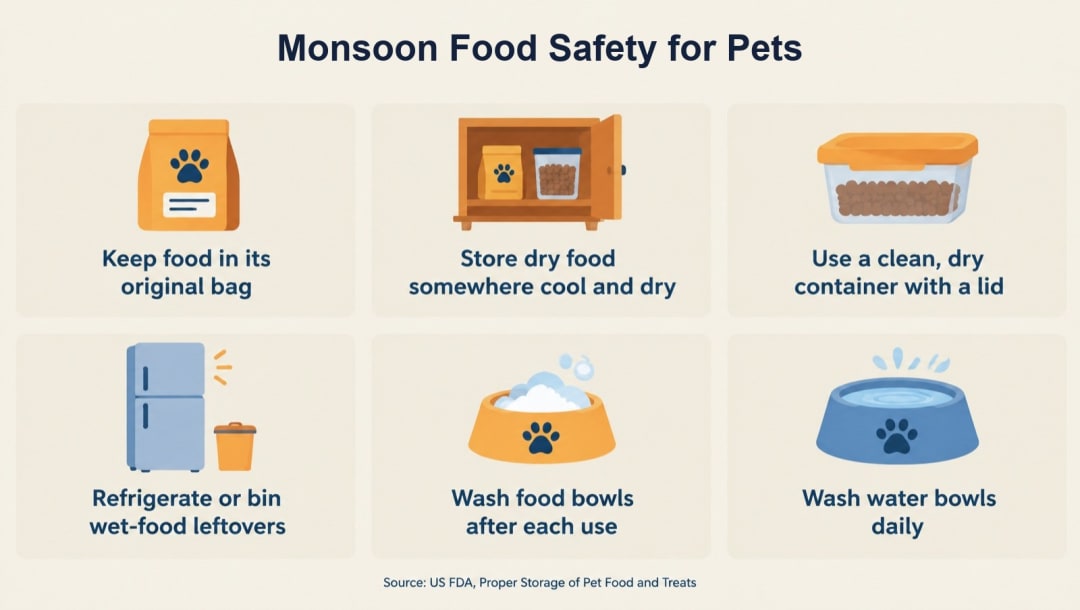
Store dry dog food in its original bag, in a cool and dry place, and refrigerate or throw out leftover wet food. The US Food and Drug Administration (FDA), a US government regulator, sets out these steps in its advice on proper storage of pet food and treats.
1. Keep Food in the Original Bag
"Store pet food and treats in the original container or bag," the FDA says. Its tips for safe handling of pet food add: "keep the top of the bag tightly folded down."
2. Choose a Cool, Dry Spot
"Store dry pet food and unopened canned food in a cool and dry place," the FDA advises, and notes that "Excess heat or moisture may cause the nutrients to break down."
3. Use a Clean Container With a Lid
If you use a storage container, the FDA suggests you "put the entire bag into the container rather than pour the kibble directly into it." Either way, "make sure it's clean, dry, and has a lid that fits snuggly."
4. Deal With Wet-Food Leftovers Promptly
"Promptly refrigerate or throw out unused or leftover canned and pouched pet food," according to the FDA.
5. Wash Bowls and Hands
The FDA says to "Wash and dry pet food bowls after each use," and to "wash your hands for at least 20 seconds with soap and hot water" when handling pet food.
6. Wash Water Bowls Daily
"Wash water bowls daily," the FDA advises.
Is a Raw Diet Safe for Dogs?
Vet and regulatory sources urge caution with raw feeding. Cornell says "A dog with an immunocompromised illness should avoid a raw diet due to the increased exposure to bacteria." The FDA goes further: "FDA thinks that raw pet food poses significant health risks to both pets and pet owners." Talk to your vet before choosing a raw diet.
How Do I Keep My Dog's Water Safe in the Rainy Season?
Use a clean bowl, washed daily as in step 6 above, rather than letting your dog drink from puddles.
VCA Animal Hospitals, a US vet hospital network, says in its guide to leptospirosis in dogs that the bacteria "can survive in the environment for long periods in warm, stagnant water or moist soil." For more on leptospirosis, ticks and damp coats, read our monsoon pet care guide for Mumbai.
How Do I Stop My Dog Gaining Weight in the Monsoon?
Measure meals and keep treats small, especially if rainy days mean less exercise. The PDSA, a UK vet charity, says in its guide to obesity in dogs: "Your dog might be eating too much food or too many treats. They might also not be getting enough exercise. This is the most common reason for weight gain in dogs."
It warns that "Being overweight is linked to several health problems and a reduced lifespan."
To check your dog's shape, the PDSA says "The skin should move freely over the ribs, which you should be able to feel with a light touch." WSAVA's treats guide says "Treats should always make up less than 10% of a dog's daily calorie intake." If your dog needs to lose weight, the PDSA says to speak to your vet practice.
Can I Change My Dog's Food During the Monsoon?
Yes, but change it gradually over several days. The American Kennel Club (AKC), a US dog breed registry, says in its guide to switching dog foods that "Switching your dog's food abruptly can cause gastrointestinal upset, such as vomiting, diarrhea, and a decreased appetite."
"Ideally, these transitions should happen over 5-7 days," the AKC says, starting with "25% new diet and 75% old diet." It adds: "if you've transitioned gradually and your dog is still experiencing stomach upset, it's best to consult with your veterinarian."
Do Cats Need Immunity Food in the Monsoon?
Cats need the same base as dogs: a complete and balanced diet. WSAVA's guide to feeding treats to your cat says "every cat needs a complete and balanced diet" and that treats "should always make up less than 10% of a cat's daily calorie intake."
Common Mistakes to Avoid
Avoid these mistakes this monsoon.
Buying a food for words like "holistic" or "premium" instead of checking that it is labelled complete.
Adding vitamins or supplements without asking your vet.
Pouring kibble loose into an open tub, or leaving the bag open in a damp spot.
Switching foods overnight.
Feeding table scraps. WSAVA says "Human food and table scraps can be unhealthy and potentially dangerous to dogs."
When to Call a Groomer or a Vet
Call a vet, not a groomer, for any tummy upset, weight change or question about diet or supplements. The PDSA's guide to dog diarrhoea says to "contact your vet for advice as soon as possible if it's been ongoing for more than 24 hours", or if your dog is "very young, very old" or seems unwell.
Mould toxins are another reason to act fast. The FDA's page on aflatoxin poisoning in pets explains that aflatoxins are "toxins produced by the mold Aspergillus flavus", which grow on "pet food ingredients such as corn, peanuts, and other grains", and that "The toxins can be present even if there is no visible mold on the pet food." Signs include "sluggishness, loss of appetite, vomiting". If you suspect a food, "immediately stop feeding the suspected food" and "take him/her to a veterinarian immediately".
Can a Groomer Help My Dog Stay Clean and Dry in the Monsoon?
Yes, a groomer can help keep your dog's coat clean and dry, though diet questions belong with your vet. FurDial's at-home groomers cover Mumbai, Thane, Navi Mumbai and Vasai-Virar. The groomer comes to your home, so there's no cage and no car ride, and every groomer has 5+ years of experience.
The Clean Aesthetic (₹1,699, about 90 minutes) includes a deep conditioning bath and a blow dry right down to the skin. The Full Flex (₹2,399, about 120 minutes) includes everything in Drip & Trim (₹1,999), such as a full body haircut, plus de-shedding, de-matting (tangles worked out by hand where kinder than clipping), a calming massage, and anti-tick and flea treatment. The anti-tick and flea treatments are grooming treatments, not a cure; heavy infestations need a vet.
Prices include GST, with no travel charge, and you can pay after the service by UPI or cash, or pay online. Only pets with up-to-date core vaccinations can be groomed. See all grooming packages and prices.
Frequently Asked Questions
Which Food Gives Instant Immunity?
None that we found: no vet body or vet school source we reviewed names a food that gives instant immunity. Cornell's article also warns: "If it sounds too good to be true, the claim is likely false."
Can I Give My Dog Human Vitamins?
Not without your vet's advice. Cornell warns about human supplements: "Human ones may have too high a dose or inappropriate ingredients."
Should I Trust Immunity Claims on Websites?
Check them with your vet. WSAVA's Savvy Dog Owner's Guide to nutrition online says "What you read online should enhance what your vet tells you, not replace it." It also advises: "Be skeptical of grand claims or easy answers to difficult problems."
Final Thoughts
Vet sources don't name a magic immunity food for dogs. They point to a complete and balanced diet, small extras, no supplements without your vet, and careful food storage through the monsoon. For any tummy upset or diet question, see your vet.
To keep the coat clean and dry without a trip out in the rain, book a FurDial groom at home.