
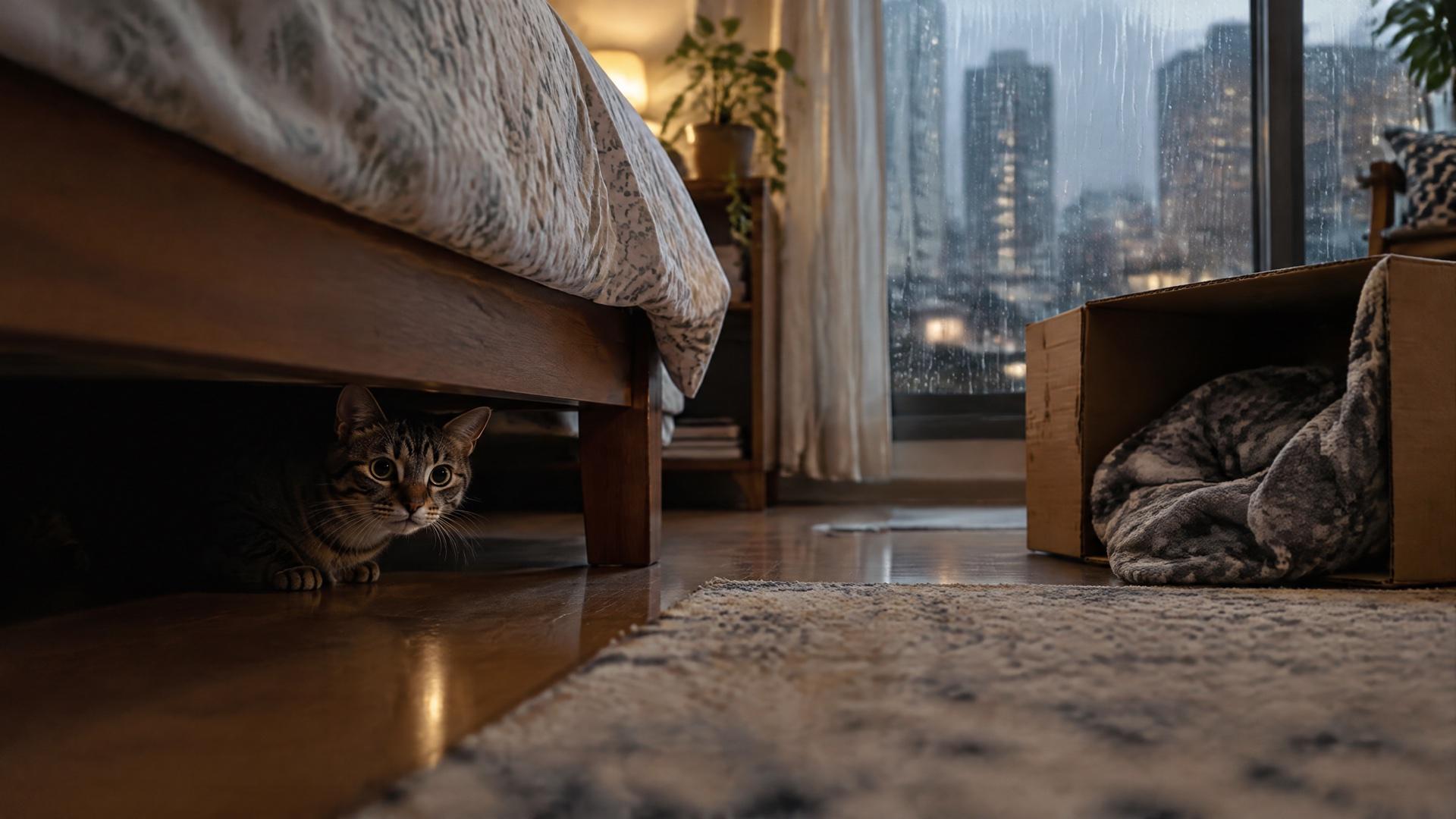
Cats hide because hiding is a normal way to rest and feel safe, and because stress from things like fireworks, building works, other cats or a new home can make them hide away; a cat that hides more than usual may be unwell, so see a vet first. In Mumbai, thunder during the monsoon, Diwali crackers, drilling next door and a busy flat can all send a cat under the bed. Why do cats hide, and when should you worry? This guide explains when hiding is normal, when it signals illness or pain, and how pet parents can help.
Key Takeaways
Hiding is normal cat behaviour, whether to sleep or to feel safe.
Stress triggers include other cats, fireworks, building works and moving home.
Cats are excellent at hiding signs of illness or pain, so hiding more than usual needs a vet check.
Never coax, drag or force a cat out of its hiding place.
What Does It Mean When a Cat Is Hiding?
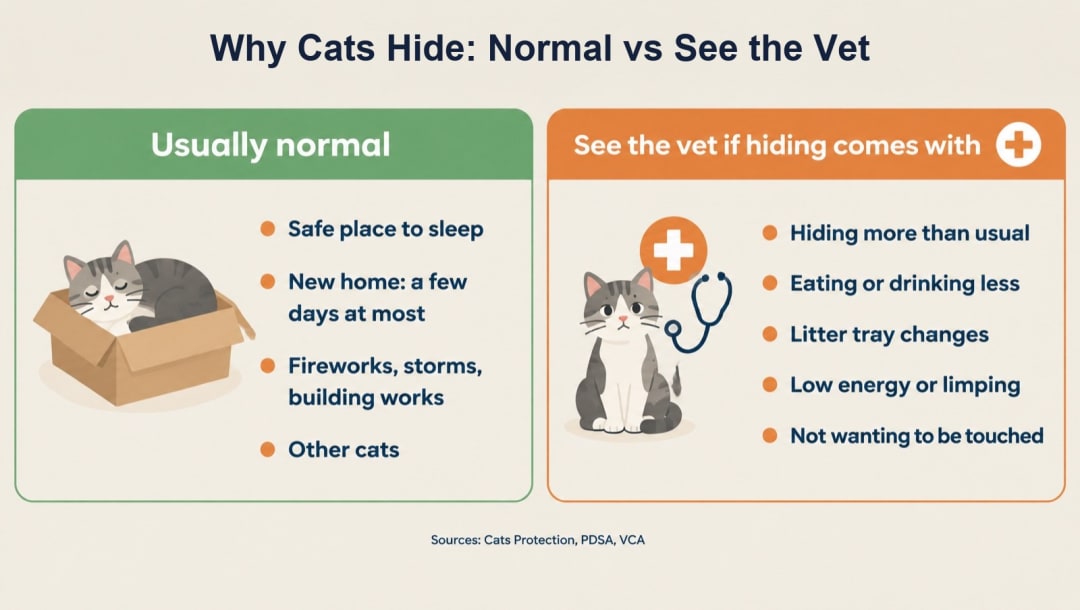
When a cat is hiding, it may be resting or playing, it may feel stressed, or it may be unwell. Cats Protection, a UK cat charity, says in its guide to why cats hide: "It's part of a cat's normal behaviour to hide, whether this is finding a safe place to sleep".
"If you notice your cat hiding more than usual, however, it could be that they're feeling stressed," Cats Protection explains, and it may also mean your cat is unwell. Its advice is to take them to the vet first "to get checked over and rule out any illnesses."
Why Do Cats Hide When They Are Scared?
Cats hide when they are scared because running away and hiding is their natural response to a threat. International Cat Care (iCatCare), an international cat welfare charity, says in its explainer on what a cat is that "A cat's natural response to a threat is to run away and hide."
It adds: "Being a small creature, without a pack or group to help protect or alert them to danger, leads them to be highly reactive." A Cats Protection behaviour blog on hiding, written by its Behaviour Manager, notes that stressed cats "would prefer to run away, get up high and hide, and research indicates that by doing these things, cats' stress levels will reduce."
What Makes a Cat Hide Under the Bed?
A cat may hide under the bed to feel safe, and stress triggers include other cats, fireworks, building works and a new home. Cats Protection says: "Lots of things can cause our cats to feel stressed and hide away, especially things like:"
other cats
fireworks
building works
Other cats. The behaviour blog calls this "A common reason": "stress caused by the presence of other cats." iCatCare adds that "Cats may feel threatened, fight, or try to hide because of threats to their territory."
A new home. According to Cats Protection, "a new home is a big change for a cat and can make them feel unsure as it's unfamiliar to them."
A busy household. In a busy home, "the constant noise and comings and goings of people may affect them and lead them to hide for longer," the charity says.
Do Cats Hide During Storms and Fireworks?
Yes, loud noise from fireworks and storms can make cats hide. The PDSA, a UK vet charity, lists "Cowering and hiding behind or on top of furniture" as a sign of fear in its guide to cats and fireworks. It says "Cats often feel safest when they're up high", suggesting a den "on a shelf, on top of a wardrobe, or in the top of a cupboard".
For storms, the PDSA's blog on keeping pets safe in stormy weather says stress can show as "scratching, hiding, or yowling", and that "cats may need a safe space for those times when they want to hide away." It advises you to "keep all windows and curtains shut so that your cat isn't fully exposed to the storm."
See our monsoon pet care guide for Mumbai, and for crackers, our tips on keeping pets safe and calm at Diwali.
Why Do Cats Hide When They Are Sick?
Cats hide when they are sick because they instinctively mask pain and illness. iCatCare says "Cats are excellent at hiding signs of illness or pain", adding that "they tend to stay still and quiet, so as not to attract attention."
VCA Animal Hospitals, a US vet hospital network, agrees in its guide to signs of pain in cats: "Cats have an instinct to hide or mask pain, making pain difficult to diagnose." It says "Cats in pain may withdraw from their usual family interactions" and "may start hiding."
VCA also lists these signs of pain:
"Decreased eating and/or drinking"
"Changes in elimination"
"Reluctance to go up or down stairs or to jump onto furniture"
grooming less, or over-grooming
VCA says "any of these changes may indicate pain and should be brought to your veterinarian's attention."
How Long Is It Normal for a Cat to Hide?
A new cat may hide for a few days: Cats Protection says it would usually only expect a new cat to hide for "a few days at most, but each cat is different." It gives no set time for other triggers. "If you are worried about your cat's eating, drinking or toileting then contact your vet," the charity advises. New to cats? Read our first-time pet parent guide.
How Do I Get My Cat to Stop Hiding?
Help a cat stop hiding by making it feel safe enough to come out on its own, not by pulling it out.
1. Don't Coax, Drag or Force Them Out
Cats Protection warns: "Trying to coax them out might make them feel more anxious and make them hide for longer." The PDSA adds: "Never force them out of the den even if they've been in it for a long time", and "if they want to be alone, let them".
2. Give Them Safe Hiding Places
"You should make sure there's a safe space for your cat to hide if they need to," Cats Protection advises. Its guidance is to choose quiet, covered spots up high, away from food, water and litter trays, in places your cat already likes. The behaviour blog adds: "provide plenty of hiding places, escape routes and elevated perches and, most importantly, let them hide."
3. Have One Per Cat Plus One Extra
In a multi-cat home, iCatCare's guide to stress in cats recommends "hiding places, high perches, scratching posts and toys", with "one per cat plus one extra, positioned in different locations." Cats Protection says it's important to make sure "each cat has a safe hiding place away from the other."
4. Set Up a Quiet Room for a New Cat
iCatCare's guide to helping a new cat or kitten settle in says to "choose a quiet room for your kitten to live in for the first few weeks." Keep food, water and the litter tray "nearby, but not directly in or beside their hiding place," as Cats Protection puts it. If your cat hides, iCatCare says "don't try to coax them out"; let them "come to you when they feel ready."
5. Keep a Predictable Routine
"Being predictable in your behaviour and creating daily routines is a great way to minimise stress," iCatCare notes.
Our advice: in a small flat, clear a shelf or wardrobe top so your cat has a high spot away from the comings and goings of people. For more ways to settle a nervous pet, read our guide to calming an anxious dog or cat.
Should I Let My Cat Hide When Sick?
Let your cat keep a quiet hiding place, but don't wait and see: a cat hiding more than usual should see a vet to rule out illness. Cats Protection says it's best to take them to the vet first, and if "your vet can't find a medical reason for their hiding, then it might be time to find a cat behaviourist".
Common Mistakes to Avoid
Avoid these three mistakes.
Pulling, coaxing or forcing a cat out of its hiding spot.
Picking up a scared cat. The PDSA says "Don't pick up or restrain your cat if they are scared".
Assuming extra hiding is just a mood, without ruling out illness.
When to Call a Groomer or a Vet
Call a vet, not a groomer, if your cat is hiding more than usual or shows any sign of illness or pain. The PDSA's cat health advice says: "We recommend taking your cat straight to the vet if you notice any of these signs of illness:" including:
"Sickness or diarrhoea"
"not eating as much as usual"
"drinking much more or less than normal"
"lack of energy/sleeping more than usual"
"limping"
"signs of pain, such as not wanting to be touched"
A groomer is not a vet: book a groom once your cat is well.
Can a Cat That Hides Be Groomed at Home?
Yes, once your cat is well, and grooming at home means no car ride and no cage. FurDial's groomers come to you across Mumbai, Thane, Navi Mumbai and Vasai-Virar, and every groomer has 5+ years of experience.
If your cat tends to hide or gets stressed, mention it in the booking note; the groomer may pause or reschedule if that is safer. The Glow Up (₹1,199, about 45 minutes) is a dry bath with waterless shampoo or foam, no water or dryer, plus ear, eye and paw cleaning. Snip & Purr (₹1,799, about 60 minutes) includes a bath with shampoo for sensitive feline skin, a calm blow dry, a full body haircut, ear, eye and paw cleaning, deep combing, nail clipping and sanitary cutting. Prices include GST, with no travel charge, and only cats with up-to-date core vaccinations can be groomed. See all grooming packages and prices.
Frequently Asked Questions
Is It Normal for a Cat to Hide All Day?
It can be, because cats sleep a lot and like a safe place to do it. Cats Protection says they "can spend at least 12 hours a day sleeping." If all-day hiding is new for your cat, see your vet.
Can I Use Cardboard Boxes as Hiding Places?
Yes. The Cats Protection behaviour blog says you can easily add hiding places by "placing lots of cardboard boxes around the house". Cats Protection adds: "Just make sure they can get out of it easily and always check for feline visitors" before throwing a box away.
Why Do Cats Bury Their Poo?
Burying poo is an old habit linked to staying hidden. A veterinary nurse writing on the Cats Protection blog about why cats bury their poo says "it is actually a hangover from the days when cats lived in the African Savannah", and that "it helped them to stay concealed from the bigger predators wanting a cat for dinner."
Final Thoughts
Cats hide to rest, to feel safe and to cope with stress. Give them safe hiding spots, keep your routine steady and let them come out in their own time. If your cat hides more than usual or shows signs of illness, see your vet.
Once your cat is settled, skip the car ride: book a FurDial groom at home and mention your cat's hiding in the booking note.