
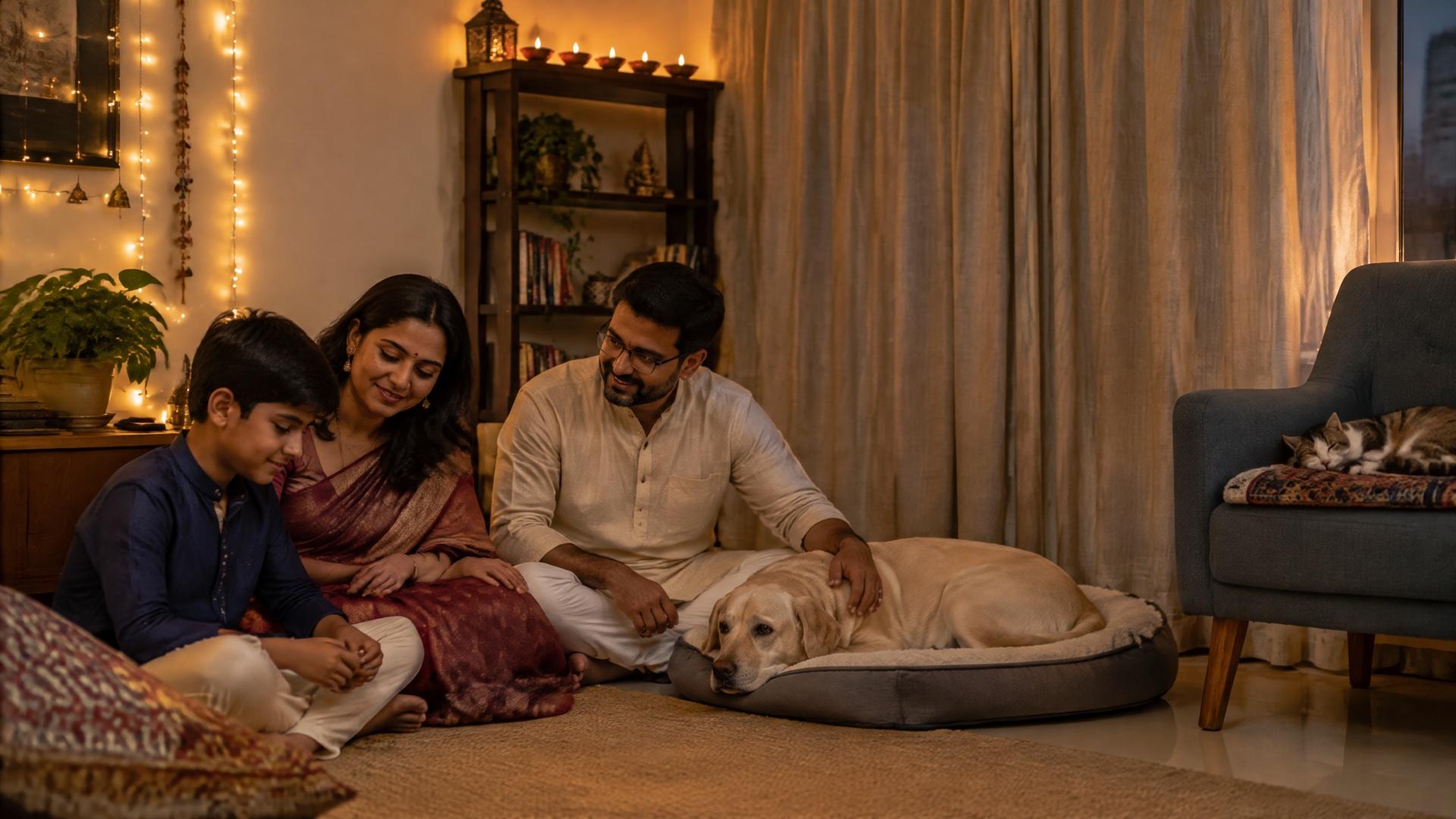
Keep pets indoors after dark with an open safe den, walk dogs before the crackers start, close the curtains and add background noise, keep sweets and diyas out of reach, and never punish a frightened pet. Diwali 2026 falls in early November, and in Mumbai, crackers in housing society compounds and on nearby roads can carry on late into the night. This guide shows pet parents how to keep dogs during Diwali calm and safe, what cats need, the hazards facing pets during Diwali, and when to call your vet.
Key Takeaways
Walk dogs while it's still light, bring cats in before dark, and close windows and curtains.
Give your pet an open den it can always reach, and never force it in or shut it inside.
Comfort a scared pet calmly if it comes to you, and never punish fear.
Keep chocolate, sugar-free sweets and lit diyas away from pets, and call your vet if fear or a swallowed sweet is a worry.
How Do You Keep a Dog Calm During Diwali Fireworks?
Plan the evening before the first cracker: walk early, close up the house, open a safe den and stay with your dog. The PDSA, a UK vet charity, and Dogs Trust, a UK dog welfare charity, set out these steps between them in the PDSA's vet-written guide to dogs and fireworks and Dogs Trust's fireworks advice for dog owners.
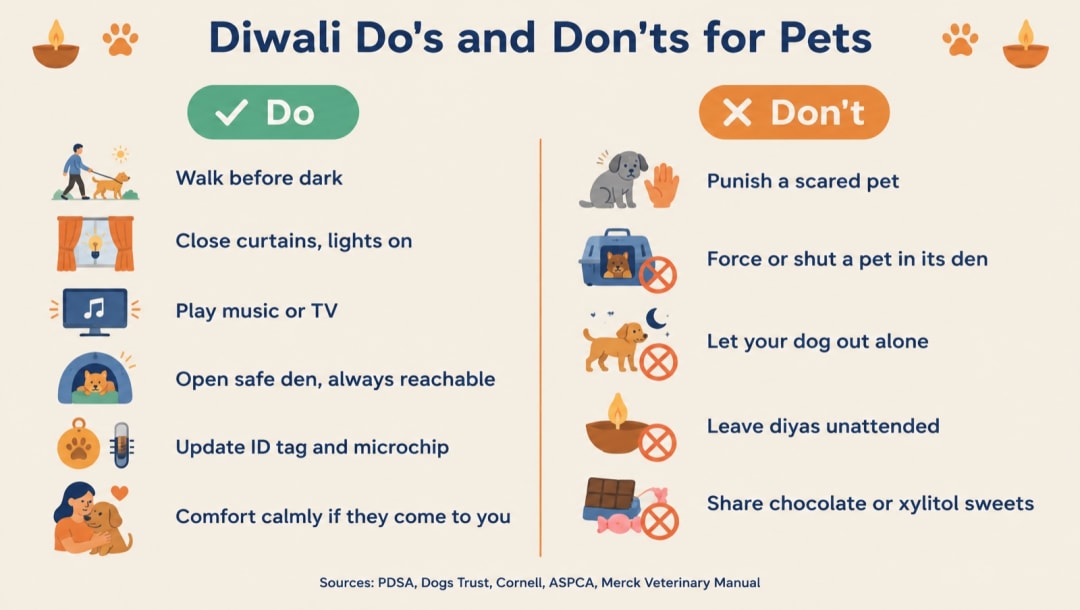
Do:
Walk your dog while it's still light.
Close windows and curtains, and leave the lights on.
Play music or the TV to help mask the noise.
Give your pet an open den it can reach at all times.
Check that your pet's ID tag and microchip details are up to date.
Comfort your pet calmly if it comes to you.
Don't:
Punish or tell off a scared pet.
Force your pet into a den or shut it inside.
Let your dog out on its own.
Leave diyas or candles unattended.
Share sweets, especially chocolate or anything with xylitol.
What Are the Signs Your Pet Is Scared of Firecrackers?
Shaking, hiding, restlessness and refusing food are common signs, but some pets show only small changes. The Riney Canine Health Center at Cornell University's College of Veterinary Medicine says in its page on fear of fireworks and thunderstorms that "The signs of fear can range from mild to severe". It lists shaking, heavy breathing, restlessness, drooling, hiding and trying to escape.
The PDSA lists "Trembling and shaking", "Cowering and hiding behind furniture" and refusing to eat, and notes that some dogs show only "Small changes in their normal behaviour".
Cats show fear too. The PDSA's guide to cats and fireworks lists "Cowering and hiding behind or on top of furniture", running away and refusing food.
What Dog Breed Is Most Scared of Fireworks?
Any dog or cat can be afraid of fireworks, and studies don't agree on which breeds are most affected. The American Veterinary Society of Animal Behavior (AVSAB) summarises a Norwegian study of noise sensitivity in 17 dog breeds by Storengen and Lingaas (2015). Based on owner surveys, it found "statistically significant differences across breeds", but rankings differ between studies. Whatever the breed, watch your own pet for the signs above and plan the evening as if it may be scared.
How Do You Prepare Your Home for Diwali Night?
Set up a den, finish walks, bring cats in, close up the house and check ID, all before the crackers start.
Step 1: Set Up an Open Safe Den
The PDSA suggests a den "somewhere you know they go when they feel worried", and says: "Give them access to it at all times, but never force them into it or shut them inside it." Cornell suggests a familiar room away from the noise, with few windows and a cosy bed, and a crate only if your dog is already used to one. If you use a crate, leave the door open.
For cats, the PDSA says "Cats often feel safest when they're up high", such as on a shelf or the top of a wardrobe, and suggests putting a litter tray near the den. Cats Protection, a UK cat charity, suggests in its blog on keeping your cat calm during fireworks a "safe, comfy place in familiar territory", such as a cardboard box.
Step 2: Walk Your Dog Before Dark
The PDSA advises: "Walk them whilst it's still light and get home well before dark, before fireworks are likely to start." Dogs Trust puts it simply: "Don't go out after dark."
Our advice: in a housing society, finish the evening walk before neighbours start bursting crackers in the compound.
Step 3: Bring Cats In and Shut Windows
The PDSA says to "Get them inside well before dark" and to shut windows and cat flaps. Cats Protection also advises: "keep your cat in after dark", with a litter tray indoors. In a Mumbai flat, close balcony doors too.
Step 4: Close Curtains and Add Background Noise
The PDSA advises: "Close your curtains before dark and leave the lights on to hide the flashes", and "Play some music to help drown out fireworks noises." Dogs Trust suggests you "Put on music or the TV to help disguise the noise."
Step 5: Check ID Tags and Microchip Details
Cornell advises: "Always ensure your dog's ID collar and/or microchip information are current", because a frightened pet may bolt and get lost or hurt. The ASPCA, a US animal welfare charity, warns in its article on how fireworks can harm pets that "Some pets can panic and cause injury to themselves while trying to escape".
Should You Comfort a Scared Dog or Cat During Fireworks?
Yes, comfort your pet calmly if it comes to you, and let it hide if it prefers. Some older advice says to ignore a fearful dog, but the PDSA says that if your dog seeks reassurance, comfort it and "don't ignore them". If it wants to be alone, "let them (just keep a close eye on them)". Dogs Trust says "Stay with your dog" and "calmly give them attention and comfort".
Never punish fear. The PDSA says: "Never punish your dog for anything they do when they're scared." Cornell warns that "Punishment must never be used because it will only increase your dog's distress."
Cats need a lighter touch. The PDSA suggests comforting a cat that comes to you, but not picking up a scared cat, and notes that punishment only increases fear.
Which Diwali Hazards Are Dangerous for Pets?
Sweets, open flames, electrical wires and open doors are the main festival risks beyond the noise.
Mithai, Chocolate and Sugar-Free Sweets
Dogs are the pets most often affected by chocolate poisoning. The Merck Veterinary Manual, a reference for vets, says in its page on chocolate toxicosis that "Dogs are most often affected because of their indiscriminate eating habits and easy access to sources of chocolate". Signs usually appear within 6 to 12 hours, and early signs include vomiting, diarrhoea and restlessness.
The ASPCA's list of people foods to avoid feeding your pets says the darker the chocolate, the greater the risk. It warns that xylitol "is used as a sweetener in many products, including gum, candy, baked goods and toothpaste" and can cause low blood sugar and liver damage. It also says nuts can cause vomiting, diarrhoea and possibly pancreatitis.
Merck's page on xylitol toxicosis in dogs says it's found in "sugar-free products, such as gums, candies, mints, peanut butter, and baked goods", so check labels. The ASPCA's holiday safety tips warn that "Fatty, sweet and spicy foods" are risky for pets and advise keeping to their usual diet.
Our advice: if your dog eats chocolate, sugar-free mithai or other sugar-free sweets, call your vet straight away rather than waiting for signs.
Diyas and Candles
The ASPCA advises: "make sure you do not leave any candles unattended", because pets can knock them over and cause burns or a fire. Lit diyas are open flames too, so the same care applies. Put diyas out before you leave the room, and keep them where pets can't reach or brush past them.
Lights and Wires
The ASPCA warns that "A wire can deliver a potentially lethal electrical shock." Keep light strings and extension cords out of reach of pets that chew.
Guests and Open Doors
The ASPCA suggests asking houseguests to keep medicines in a closed cabinet and offering "a safe space your pet can retreat to". Our advice: ask guests to shut the main door and safety grille behind them, and keep your pet in its den room while visitors come and go.
What Should You Check After Diwali?
Check the ground for cracker debris on walks in the days after Diwali. The ASPCA warns that "some dogs may eat fireworks", which "can even be corrosive to the lining of the digestive tract", and says "all remnants of fireworks should be picked up and discarded appropriately".
The University of Illinois College of Veterinary Medicine notes in its advice on fireworks debris that "debris from the festivities does not disappear overnight" and advises: "Be on the lookout when walking your dog during this season." Our advice: on morning walks, scan society compounds, building gates and roadsides, and keep your dog close. If it swallows any cracker remains, call your vet.
Can You Help Your Pet Cope Better Next Year?
Yes, but you need to start months ahead. The PDSA says "You'll need to start several months before fireworks season", playing firework sounds "at a very low volume" paired with treats. Dogs Trust says "Sound therapy can help your dog feel more comfortable with new and scary life noises." Cornell advises discussing any treatment with your vet well in advance.
Common Mistakes to Avoid
Most Diwali mistakes come from shutting a pet in or letting it slip out.
Shutting a pet inside its den or a crate.
Picking up or telling off a scared pet.
Leaving windows, balcony doors or the main door open.
Letting your dog eat debris on post-Diwali walks.
When Should You Call a Groomer or a Vet?
Call your vet about fear, swallowed sweets or injuries, and keep a groomer for routine coat care away from the noisiest days.
Call a vet when:
your dog is still scared of fireworks "despite all of these steps", as the PDSA puts it
the fear feels unmanageable. Cornell suggests asking about a referral to a veterinary behaviourist, and Dogs Trust says vets "can also refer you to a behaviourist"
the anxiety continues. VCA Animal Hospitals, a network of vet hospitals, suggests in its guide to why dogs fear loud sounds asking your vet about long-term care options
your cat suddenly becomes fearful, since the PDSA says pain or illness could be the cause
your pet eats chocolate, sugar-free sweets or cracker remains, or is burned or hurt
Our advice: never give your pet any medicine unless your vet has prescribed it.
Call a groomer when:
your pet is due its regular bath, brush, nail trim or haircut and you'd rather book it outside the festival week
your pet's coat needs routine care after Diwali (a groomer is not a vet, so take burns, injuries or ongoing fear to your vet)
Should You Book a Pet Groom Before or After Diwali?
Book it before or after the festival week, rather than travelling to a salon on the noisiest days.
FurDial offers on-demand grooming at home for dogs and cats across Mumbai, Thane, Navi Mumbai and Vasai-Virar (see the areas we cover). The groomer comes to you (see how an at-home groom works), so there's no cage and no car ride, and every groomer has 5+ years of experience. Dog grooming starts at ₹1,699 (The Clean Aesthetic, about 90 minutes) and cat grooming at ₹1,199 (The Glow Up, about 45 minutes), GST included, with no travel charge. You can pay after the service by UPI or cash, or pay online. See all grooming packages and prices.
Only pets with up-to-date core vaccinations can be groomed. If your pet is anxious, mention it in the booking note, and the groomer may pause or reschedule if that is safer.
Frequently Asked Questions
Can I Leave My Dog Alone During Diwali?
Try not to on the loudest evenings. Dogs Trust advises "Stay with your dog" during fireworks. If you do have to go out, walk your dog before dark first, and leave your dog with its open den, the curtains closed and music or the TV on.
Is It OK to Crate My Dog During Fireworks?
Only if your dog is already used to a crate, as Cornell advises, and keep the door open. The PDSA says never to shut a pet inside its den.
Can Cats Eat Diwali Sweets?
It's best not to share them. Merck says cats are not at risk of low blood sugar or liver injury from xylitol, but the ASPCA warns that fatty, sweet and spicy foods are risky for pets and advises keeping to their usual diet.
Final Thoughts
Plan ahead: walk early, close up the house, open a safe den, stay calm and keep sweets and diyas out of reach. Check for debris afterwards, and talk to your vet if fear doesn't ease.
If your dog or cat is due a groom, book a FurDial groom at home before or after the festival week, and a groomer will come to you.