
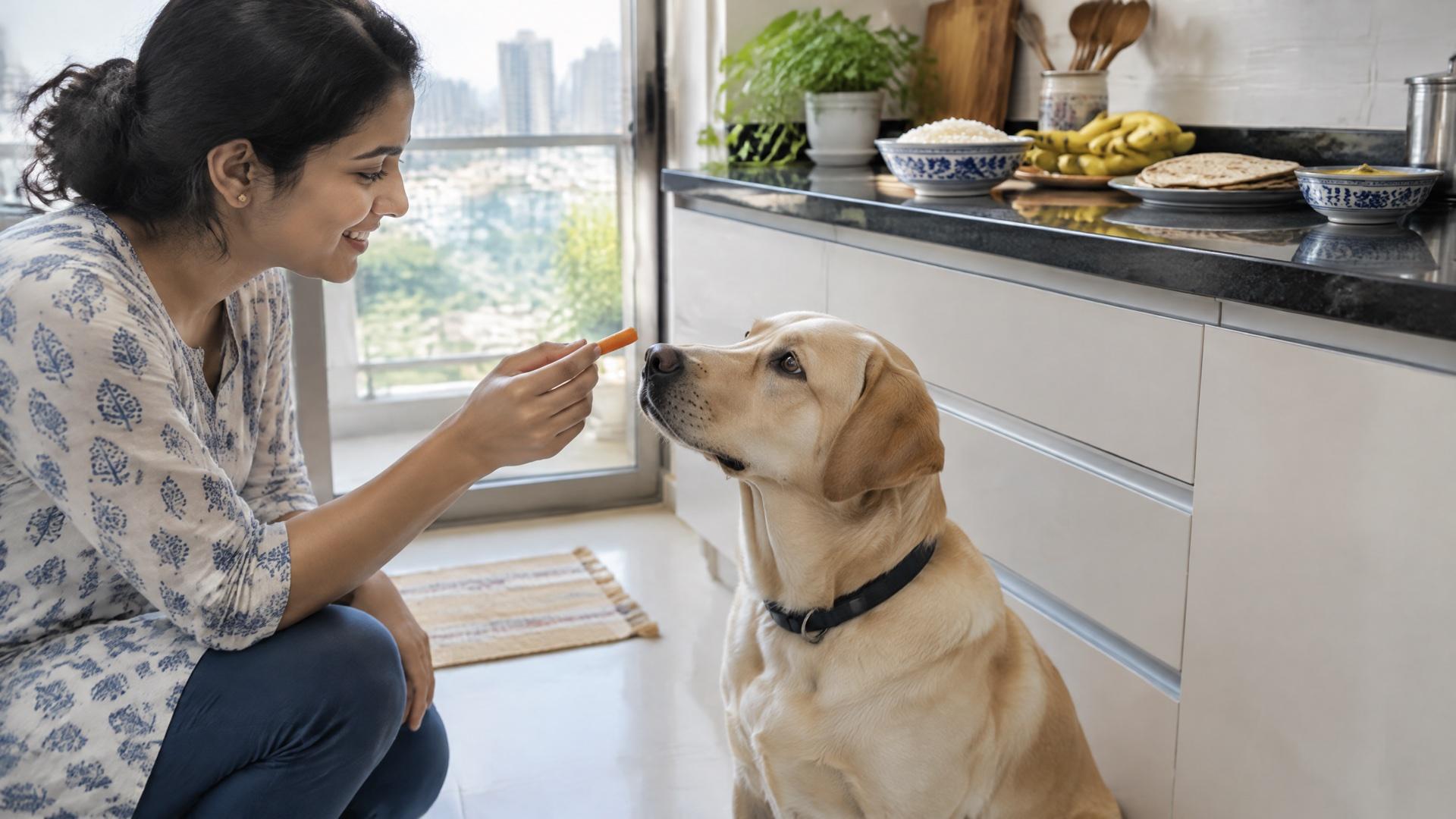
Dogs can eat small amounts of some plain human foods, such as unseasoned cooked chicken, plain rice, carrots, apple without the seeds and core, blueberries and fresh pineapple, but chocolate, grapes, raisins, onion, garlic, xylitol, macadamia nuts, alcohol and cooked bones are never safe. In a busy Mumbai kitchen, a dog waiting by the counter while the tadka sizzles is a familiar sight. This guide answers what human food can dogs eat safely, which foods to keep well out of reach, and what to do if your dog eats something it shouldn't.
Key Takeaways
Serve any human food plain: no salt, sugar, added fat or seasoning.
Onion and garlic are poisonous in every form, including cooked and powdered, so curries and masalas made with them are off the menu.
Treats should make up no more than 10 per cent of your dog's daily calories, according to the American Kennel Club.
If your dog eats something toxic, call your vet straight away and don't make your dog sick unless the vet tells you to.
What Human Food Can Dogs Eat Safely?
Plain, cooked, unseasoned foods such as chicken, rice and some fruits and vegetables are the safest choices, offered in small amounts. The AKC (American Kennel Club), a US dog breed registry that publishes vet-reviewed advice, says in its guide to human foods dogs can and can't eat that you should "Serve foods plain, fully cooked when required, and without salt, sugar, added fats, or seasonings."
The AKC also says human food is an occasional extra, not a replacement for complete and balanced dog food.
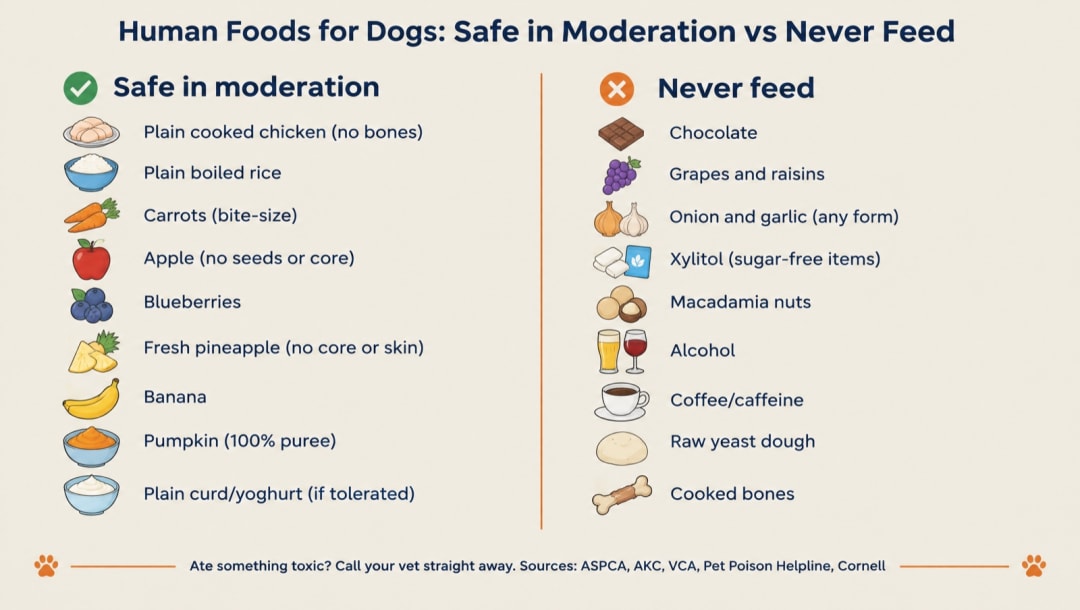
Foods the AKC lists as safe in moderation include:
Plain cooked chicken. Its guide on whether dogs can eat chicken says "any unseasoned roasted, poached, grilled, or baked chicken" can be served, taken off the bone first.
Plain rice. The AKC's article on rice for dogs says "boil it in water and do not add any seasonings or spices".
Carrots. Its page on carrots for dogs says "Raw and cooked carrots are healthy options for dogs" and suggests you "cut whole carrots and even carrot sticks into bite-size chunks".
Plain yoghurt, which many Indian homes call curd, for dogs that tolerate dairy (more on dairy below).
Cooked eggs, "fully cooked and prepared without salt, butter, or seasonings".
Which Fruits and Vegetables Can Dogs Eat?
Apples, bananas, blueberries, carrots, mango, pineapple and pumpkin are all on the AKC's safe list, with some preparation. Its guide to fruits and vegetables dogs can or can't eat gives these caveats:
Apples: "remove the seeds and core first."
Bananas: "should be given as a treat, not part of your dog's main diet".
Mango: "remove the hard pit first, as it contains small amounts of cyanide and can become a choking hazard."
Pumpkin: "always choose 100% pumpkin puree" if you buy it tinned.
It lists grapes and onions as foods dogs should never eat.
Can Dogs Eat Pineapple?
Yes, fresh pineapple is fine in small amounts, but tinned pineapple isn't. The AKC's article on pineapple for dogs says "Raw pineapple, in small amounts, is an excellent snack for dogs."
Remove the skin and core first. The AKC warns the core "has the potential to cause obstructions." It adds that "A few chunks of raw pineapple are usually enough for most dogs," and that canned pineapple "should be avoided" because of the sugary syrup.
Can Dogs Eat Blueberries?
Yes, in moderation. The AKC's guide to blueberries for dogs says "Yes, dogs can eat blueberries in moderation." Wash them first.
Their size can be a choking risk "particularly for very small dogs", so the AKC suggests halving them for tiny breeds. It says "Small dogs may only need 2–3 blueberries".
What Foods Can Dogs Not Eat?
Chocolate, grapes and raisins, onion, garlic and chives, xylitol, macadamia nuts, alcohol, caffeine, raw yeast dough and cooked bones should never be fed. The ASPCA, a US animal welfare charity that runs an animal poison control centre, explains why in its list of people foods to avoid feeding your pets:
Chocolate, coffee and caffeine: "The darker (higher cacao percentage) the chocolate, or the higher the caffeine content, the greater the risk for toxicity." The AKC says plainly, "Dogs should never eat chocolate."
Grapes and raisins: these "can lead to kidney damage." The AKC's fruit guide says they are "highly toxic to dogs, no matter their breed, sex, or age."
Onion, garlic and chives: these "can cause gastrointestinal irritation and red blood cell damage, which can lead to anemia."
Xylitol: this sweetener "can cause low blood sugar (hypoglycemia) and potentially liver damage". VCA Animal Hospitals, a network of vet hospitals, lists common sources in its guide to xylitol poisoning in dogs, including "sugar-free gum, candies, breath mints, baked goods, peanut butter".
Macadamia nuts: these "can cause weakness, incoordination, depression, vomiting, tremors and hyperthermia in dogs."
Alcohol: "Alcohol is rapidly absorbed after ingestion, so it's important to take prompt action."
Raw yeast dough: it "can rise and cause gas to accumulate in your pet's digestive system."
Bones: dogs "might sustain injury or obstruction to the gastrointestinal tract when ingesting bones."
Why Are Cooked Bones Dangerous?
Cooked bones can splinter. The AKC's chicken guide warns "Cooked chicken bones splinter easily, which can cause choking or a gastrointestinal tract puncture," and its human foods guide says "Never give your dog cooked poultry bones."
Can Fatty or Salty Food Hurt Dogs?
Yes. Pet Poison Helpline, a US animal poison control service, says in its article on whether table food is poisonous for dogs that "Fatty foods such as butter, oils, meat drippings/grease, chocolate and meat scraps may cause pancreatitis". The ASPCA adds that "Excessive salt intake can produce increased thirst and urination, and sometimes abnormal electrolytes in the blood."
Are Indian Kitchen Foods Safe for Dogs?
Some are, if served plain, but anything cooked with onion or garlic is not. VCA's guide to onion and garlic poisoning in dogs says "All forms are poisonous to dogs, including raw, cooked, dried, powdered, and liquid preparations."
That covers curries, gravies and masalas made with onion, garlic or their powders. VCA notes powdered forms are more concentrated, so they carry a higher risk, and advises: "Never give food seasoned with onions or garlic to your dog." The AKC says garlic is "3-5 times more toxic" than onion.
How some familiar foods stand:
Plain boiled rice: safe, as above, with no tadka, salt or spices.
Mango and banana: safe as a treat, with the mango pit removed.
Coconut: the AKC says "Small amounts of plain coconut flesh are generally safe for dogs", and the ASPCA agrees that small amounts are "not likely to cause serious harm".
Sugar-free sweets and baked goods: check the label for xylitol.
We haven't found vet-source guidance on roti, dal, paneer, ghee or mithai as foods in their own right, so ask your vet before sharing them. For festival season, see our guide to keeping pets safe during Diwali.
Can Dogs Have Milk, Curd or Cheese?
Some dogs can have a little, but dairy upsets others. The AKC says "individual dogs may not tolerate dairy products well," and "Plain yogurt is a good snack for dogs who can tolerate dairy products." It says dogs can eat cheese "in small to moderate quantities."
The ASPCA is more cautious, warning that "Milk and other dairy-based products can cause diarrhea or other digestive upset." So keep any curd plain and the portion small.
How Much Human Food Can a Dog Have?
Keep all treats, human food included, to no more than 10 per cent of your dog's daily calories. The AKC's blueberries guide says "Treats of any kind should make up no more than 10% of your dog's daily caloric intake."
Ask your vet before adding any new food. When introducing rice, the AKC's rice guide says to "consult your veterinarian first and then start off slowly".
What to Do If Your Dog Eats Something Toxic
Call your vet or the nearest emergency vet clinic immediately, and don't make your dog sick unless the vet tells you to.
1. Move Your Dog Away From the Food
Our advice: take away whatever is left.
2. Call Your Vet Straight Away
The Cornell University College of Veterinary Medicine's Riney Canine Health Center says in its guide to first aid for poisonous substances: "Call your veterinarian or local emergency veterinary clinic immediately." VCA's onion guide also says to call "right away".
3. Don't Make Your Dog Vomit Unless Told To
Cornell warns that "making them vomit may not always be the right thing to do." VCA's xylitol guide is direct: "Do not induce vomiting or give anything orally to your dog unless your veterinarian directs you to do so."
4. Tell the Vet What and How Much
Our advice: keep the wrapper or packet, and tell your vet what your dog ate, roughly how much and when.
5. Know Where Help Is
The ASPCA Animal Poison Control Center runs 24 hours a day, 365 days a year, but it is a US-based line. Our advice: save your own vet's number and the nearest 24-hour vet clinic's number in your phone today.
Common Mistakes to Avoid
Sharing curry, dal tadka or gravy that contains onion, garlic or their powders.
Giving leftover cooked chicken or mutton bones.
Leaving chocolate, raisins or sugar-free sweets on low tables or in open bags.
Feeding fatty scraps, butter or meat drippings from the pan.
Making your dog vomit at home without your vet's advice.
Letting treats and table food crowd out complete dog food.
When Should You Call a Vet?
Call your vet whenever your dog eats something on the never-feed list, or before adding any new food to its diet.
Call a vet straight away if:
your dog has eaten chocolate, grapes, raisins, onion, garlic, xylitol, macadamia nuts, alcohol, raw dough or a cooked bone
your dog has eaten fatty scraps, butter or meat drippings
you are not sure what or how much your dog ate
This guide covers dogs only. Cats have different needs, so ask your vet before sharing any human food with a cat.
Can a Groomer Help With My Dog's Diet in Mumbai?
No, diet questions belong with your vet. A groomer looks after your dog's coat, nails, ears and paws.
FurDial's groomers come to your home across Mumbai, Thane, Navi Mumbai and Vasai-Virar, so there is no cage and no car ride. Every groomer has 5+ years of experience. The Clean Aesthetic, ₹1,699 and about 90 minutes, covers a deep conditioning bath, blow dry, brush out, nail clipping and filing, and ear, paw and eye cleaning. Prices include GST, with no travel charge. Only dogs with up-to-date core vaccinations can be groomed. See all grooming packages and prices.
Frequently Asked Questions
What Is Good for Dogs That Humans Eat?
Plain cooked chicken, plain rice, carrots, apple without seeds or core, blueberries, fresh pineapple and banana are good choices in small amounts, all listed as safe in moderation by the AKC.
Can Dogs Eat Peanut Butter?
Check the label first. The AKC says to "always read the ingredient label first", and VCA lists peanut butter among common sources of xylitol, which it calls "extremely toxic to dogs."
Is It Safe to Give My Dog Leftovers?
Only if they are plain. Pet Poison Helpline's advice is simple: "When in doubt, don't let your pet get any table food!"
Final Thoughts
So, what human food can dogs eat? Small amounts of plain foods such as chicken, rice, carrots and some fruits. Keep chocolate, grapes, raisins, xylitol and anything with onion or garlic out of reach, and call your vet at once if your dog eats something toxic.
When it's time for a bath and trim at home, book a FurDial groom at home.