
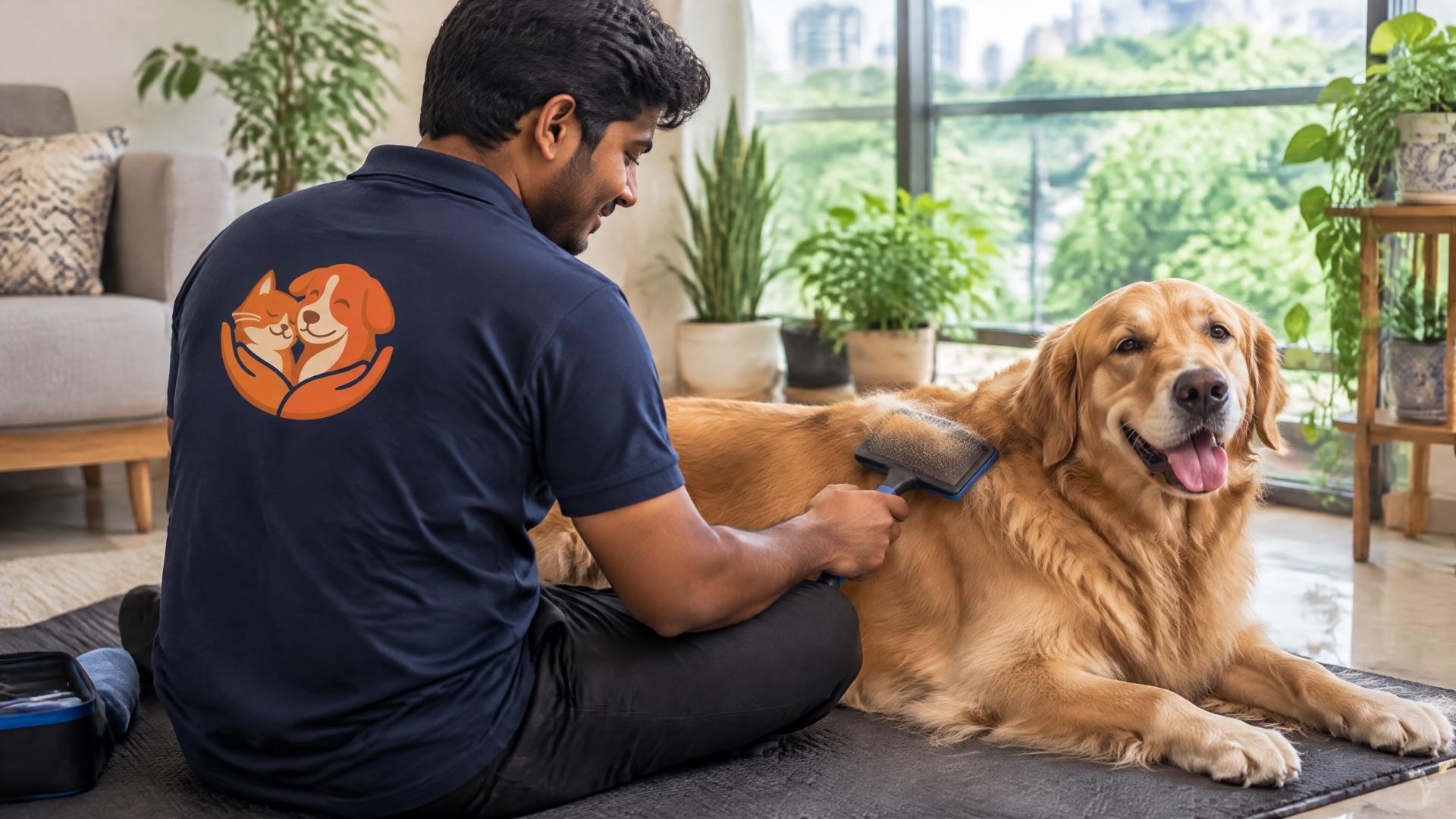
How often you brush your dog depends on its coat: smooth coats need it once to three times a week, double coats at least weekly, wire coats weekly, and long, silky or curly coats every day. In Mumbai, the monsoon brings weeks of wet walks, so a steady routine matters even more. So how often should a dog be brushed for its coat? This guide gives you a schedule and the right tool for each coat type, plus when to call a groomer or a vet. It covers the coat, not the teeth.
Key Takeaways
Brush smooth coats once to three times a week, double coats at least weekly, wire coats weekly, and long, silky or curly coats daily.
Match the tool to the coat: a rubber brush for smooth coats, a slicker and undercoat rake for double coats, a slicker and comb for long and curly coats.
Use a light touch. Brushing too hard, or too long in one spot, can hurt the skin.
Never cut mats out with scissors, and take any skin or coat change to your vet.
How Often Should a Dog Be Brushed?
Most dogs need a few brushing sessions a week, and long-coated dogs need one every day. The American Kennel Club (AKC), the US pedigree dog registry, says in its guide to grooming your dog at home: "Most dogs only need a few brushing sessions a week, though long-coated breeds often do best with daily brushing."
VCA Animal Hospitals, a network of veterinary hospitals, agrees that long, silky or curly coats require daily brushing.
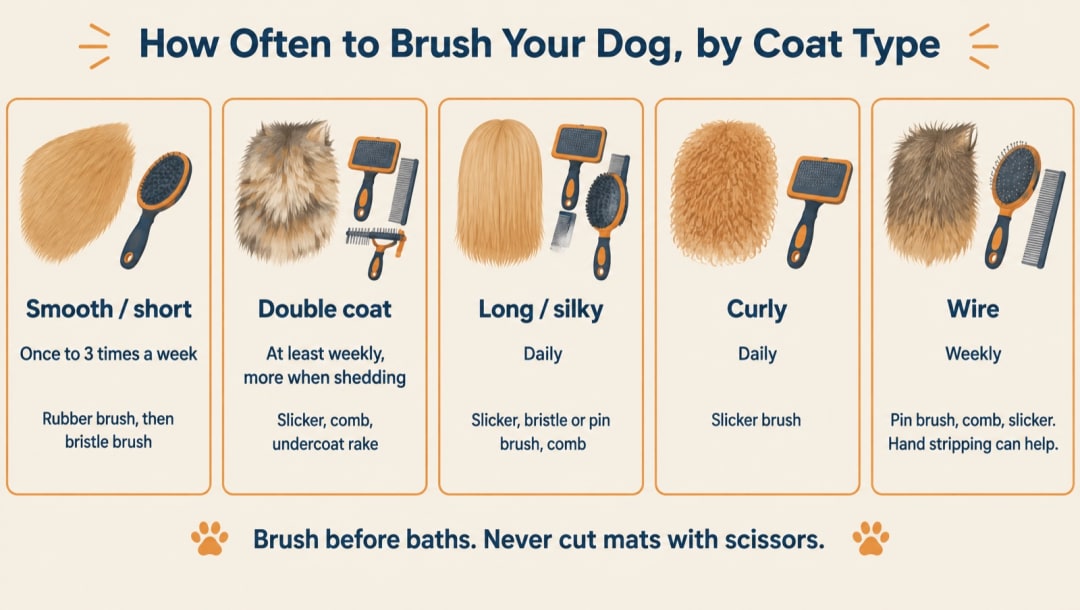
So go by coat type, not breed name. For an Indie or a mixed breed, look at the coat itself: its length, whether there's a softer layer under the top coat, and whether the hair is straight, curly or wiry.
How Often Should You Brush a Dog With Short Hair?
Once to three times a week. The ASPCA, a US animal welfare charity, says in its dog grooming tips to brush a short coat once a week. Short-haired dogs such as Labradors and Staffies may only need brushing once a week, according to the PDSA, a UK vet charity, while the Royal Kennel Club, the UK's kennel club, suggests light grooming two or three times a week.
Useful tools:
A rubber brush, then a bristle brush: the ASPCA suggests the rubber brush to loosen dead skin and dirt.
Grooming gloves or short-bristled brushes: VCA recommends these for short coats.
A rubber curry comb: the AKC suggests one for polishing smooth coats.
A shedding rake: heavy shedders may need one, says the Royal Kennel Club.
Dogs Trust, the UK dog welfare charity, says the Beagle's short, dense coat needs brushing only occasionally. Labradors are short-haired too, but the AKC counts them as a short double coat.
How Do You Brush a Dog With a Double Coat?
Work a slicker brush through small sections down to the skin, follow with a comb, and use an undercoat rake to lift loose undercoat, at least once a week and more often during heavy shedding. The AKC's guide to grooming a double-coated dog recommends the slicker and comb at least once a week. The AKC's explainer on double-coated dogs adds that heavier coats need more brushing when shedding.
Don't wait for a shedding season. VCA describes two seasonal cycles, but a groomer quoted by the AKC says dogs in warmer climates could shed four times a year or all the time. In Mumbai, brush all year.
The Best Brush for a Double Coat
The AKC's guide to choosing dog brushes recommends undercoat rakes for double-coated breeds of all fur lengths, in the correct pin length for your dog.
Double-Coated Breeds Common in India
German Shepherd: experts in the AKC's German Shepherd grooming guide suggest every other day or weekly, rising to daily in heavy shedding.
Golden Retriever: a medium double coat, says the AKC. Dogs Trust suggests brushing a few times a week, and daily when they're changing their coat. Our Golden Retriever and Shih Tzu grooming schedule has more.
Pomeranian: a thick and fluffy double coat, brushed two to three times per week, says Dogs Trust.
Siberian Husky: a thick double coat, and Dogs Trust says not to shave a Husky unless a vet recommends it.
How Often Should You Brush Long, Curly or Wire Coats?
Long and curly coats need brushing every day. Wire coats need a weekly brush and can benefit from hand stripping.
Long and Silky Coats
Brush long-haired dogs such as Lhasa Apsos every day, as the PDSA advises. Dogs Trust describes the Lhasa Apso's coat as very long, straight and silky. The Shih Tzu has a silky outer coat over a soft undercoat, and longer coats need daily brushing, according to the AKC's guide to the Shih Tzu coat.
For long coats, work out tangles with a slicker brush, then go over the coat with a bristle brush (ASPCA). Pin brushes make good finishing brushes (AKC), and long-toothed combs with offset rows of teeth help too (VCA).
Curly Coats
Brush daily. VCA says slicker brushes work well for curly, non-shedding coats like Poodles, and Dogs Trust says Poodles need regular grooming, often every day.
Wire Coats
The AKC's guide to wire-coat care says to brush once a week with a pin brush, then comb, then use a slicker. The Royal Kennel Club adds that hand stripping, with a stripping knife and your thumb, can help.
Is It Okay to Brush a Dog Every Day?
Yes, if you keep it gentle. Daily brushing is a must for long and curly coats, and VCA's guide to healthy coat and skin says it "dramatically reduces the amount of loose hair and dog dander". Short coats don't need it, so keep any daily sessions short and light.
VCA says regular checks, every day to every few days, give a better chance of spotting unusual lumps or bumps and parasites such as fleas and ticks.
Can You Overbrush a Dog?
Yes. Vet Dr Hannah Godfrey, writing for PetsRadar, warns that overbrushing can cause pain or even damage the skin. She advises not brushing one area for too long and stopping if the skin turns red or sore.
The AKC advises a light touch with slicker brushes, because pressing hard could cause discomfort.
How Do You Stop Mats in Mumbai's Monsoon?
Keep brushing, and dry your dog well after every wet walk. The PDSA notes that poodle crosses are more prone to knotting and tangling, especially if they get wet. After a rainy walk, towel your dog thoroughly and check that the coat is dry close to the skin, not just on top.
VCA says mats form around the ears, in the armpits and along the back of the legs. The ASPCA warns in A Haircut Could Save a Life that even very mild mats can cause skin irritation and progress to infected lesions, and fleas and ticks can hide in them.
Never cut a mat out with scissors, because your pet can move unexpectedly, causing a severe laceration or puncture (ASPCA). Mats should come out with clippers, never scissors (VCA), and the PDSA advises leaving them to a professional rather than tackling them at home.
How to Brush Your Dog, Step by Step
Pick the brush for your dog's coat, work in small sections down to the skin, check the skin as you go and finish with a comb and a treat.
1. Pick the Right Tool
Use the brush and comb listed for your dog's coat above.
2. Brush in Sections, Down to the Skin
A master groomer quoted by PetMD describes pushing the coat up with your hand to the line of the skin, then patting the slicker into the hair, one small section at a time. The AKC describes a similar section-by-section method with a comb, called line combing.
3. Check the Skin and Mat Hotspots
VCA says brushing removes loose hair and dead skin and helps "distribute natural skin oils along the hair shafts". Go slowly at the ears, armpits and legs, and look for lumps, fleas, ticks or redness.
4. Finish and Reward
Comb through to check for missed tangles, then finish with praise and a treat.
How Do You Brush a Dog That Hates Being Brushed?
Build up slowly. Dogs Trust's guide on how to handle your dog suggests placing the brush on your dog's body for a moment, removing it and giving a treat. If your dog seems worried, stop and go back a stage, more slowly.
The AKC's article on why dogs dislike being brushed suggests stopping after a few strokes, letting your dog sniff the brush, trying a grooming glove, brushing after a long walk and asking your vet to rule out pain.
Some dogs never tolerate brushing. VCA notes they may need shaving under sedation at the vet.
Common Mistakes to Avoid
Brushing only the top coat and missing the undercoat.
Pressing hard, or going over one patch again and again.
Cutting mats out with scissors.
Shaving a double-coated dog without a vet's advice.
Waiting for a shedding season instead of brushing all year.
Carrying on when your dog is clearly upset.
When Should You Call a Groomer or a Vet?
A groomer is not a vet. Anything that looks like a health problem goes to your vet first.
Call a groomer when:
tangles are too tight to brush out
a double coat needs a deeper de-shed than you can manage
a long or curly coat needs a haircut, or a wire coat needs hand stripping
Call a vet when:
you notice anything abnormal in the skin or coat, as the ASPCA advises
a mat has irritated the skin, as VCA advises
you see excessive dandruff, an unpleasant odour, a greasy coat or excessive shedding, which VCA says can signal an underlying problem
you find lumps, fleas or ticks, or your dog seems in pain when brushed
For flaky skin, see our guide to dry, itchy skin in dogs and cats.
Which FurDial Grooming Package Suits Your Dog's Coat?
The Clean Aesthetic suits smooth coats, Drip & Trim suits long and curly coats, and The Full Flex suits shedding double coats; every FurDial dog package includes a brush out, which pulls out loose undercoat and catches small tangles. A groomer with 5+ years of experience comes to your home in the areas we cover across Mumbai, Thane, Navi Mumbai and Vasai-Virar. Prices include GST, with no travel charge, and you can pay after the service by UPI or cash, or pay online.
The Clean Aesthetic, ₹1,699 (about 90 minutes): a deep conditioning bath, a blow dry down to the skin, a brush out, nail clipping and ear, eye and paw cleaning.
Drip & Trim, ₹1,999 (about 120 minutes): everything above, plus a full body haircut (zero cut, trim or styled finish, agreed before starting; coat condition decides what's achievable) and a hygiene cut.
The Full Flex, ₹2,399 (about 120 minutes): everything in Drip & Trim, plus de-shedding (a deeper pass for dead undercoat), de-matting by hand where kinder than clipping, anti-tick and flea treatment (not a cure; heavy infestations need a vet) and a calming massage.
For a double coat, agree a trim, not a zero cut, before the groomer starts. Only dogs with up-to-date core vaccinations can be groomed. Heavy matting may carry a small surcharge, told on arrival before the groomer starts.
See all grooming packages and prices, or read how an at-home groom works.
Frequently Asked Questions
Do Dogs Feel Better After Being Brushed?
Brushing can be good bonding time: the PDSA calls grooming "a lovely way to bond". No source we checked says dogs feel better afterwards, but regular brushing helps prevent the mats the ASPCA says can irritate the skin. Keep sessions gentle and rewarding.
How Often Should a Dog Be Groomed?
The sources we checked don't set a fixed interval for a professional groom. Keep brushing at home, and book a groom when your dog needs a haircut, a deeper de-shed or help with tangles. Here's what happens during an at-home dog groom.
Should You Brush Your Dog Before or After a Bath?
Before. VCA warns that tangles can become impossible to remove after a bath, so brush the coat out fully first.
Final Thoughts
So, how often should I brush my dog? Let the coat decide, keep a light touch and keep scissors away from mats. Any skin worry goes to your vet.
If you'd like help with a heavy shed or a tangled coat, book a FurDial groom at home and a groomer will come to you.