
Booking your dog's first professional grooming session at home can bring up plenty of questions. What will the groomer do first? Do you need to prepare anything? Will your dog cooperate? And can you stay nearby throughout the appointment?
Knowing what to expect makes the experience easier to prepare for, especially if you're a first-time pet parent.
The dog grooming process at home generally includes setting up the grooming area, checking your dog's coat and skin, brushing, nail trimming, ear cleaning, bathing, blow-drying, haircut or trimming, and a final check. A complete session typically takes around 90 to 120 minutes, depending on your dog's size, coat condition, temperament, and the services required.
Here's a closer look at each step, what you'll need to arrange at home, and how to help your dog feel comfortable.
What Happens During the Dog Grooming Process at Home?
At-home professional grooming follows a structured sequence, with each stage serving a specific purpose. The groomer works through coat care, hygiene, bathing, drying, and finishing while adjusting the approach to your dog's needs.
Step 1: The Groomer Arrives and Sets Up
The grooming session starts with preparing a suitable area in your home.
The groomer identifies a space where your dog can be handled safely and the equipment can be arranged comfortably. A bathroom or balcony with access to water and an electrical plug point is generally suitable.
Before starting, let the groomer know if your dog is nervous around strangers, uncomfortable with loud sounds, or sensitive to having their paws or ears touched.
If this is your dog's first grooming appointment, sharing these details can help the groomer decide how to approach the session.
Step 2: Coat and Skin Check
Before bathing or trimming, the groomer examines your dog's coat and skin.
This helps identify tangles, matted fur, loose hair, visible irritation, or areas that need particular attention.
Coat condition also influences how the rest of the session proceeds. A dog with a short, relatively tangle-free coat may need less preparation than a long-haired dog with several knots.
If the groomer notices an unusual lump, wound, severe irritation, or another concerning skin issue, it should be brought to your attention. Grooming is not a substitute for veterinary examination or treatment.
Step 3: Brushing and Detangling
Brushing is an important preparation step before the bath.
The groomer uses tools appropriate for your dog's coat to remove loose fur, surface dirt, and tangles. Particular attention may be needed around the ears, legs, chest, and other areas where knots can form.
Why brush before bathing?
Loose hair and tangles are often easier to address before the coat becomes wet. Bathing an already matted coat can make some tangles more difficult to manage.
The American Kennel Club also recommends brushing before washing to remove loose hair, dirt, and debris.
Severe matting may require a different approach from ordinary brushing. Rather than forcing a comb through painful knots, the groomer should explain the safest available option.
Step 4: Nail Trimming
Next comes nail care.
The groomer checks the length of your dog's nails and trims them where appropriate, taking care to avoid the sensitive inner portion known as the quick.
Overgrown nails can make walking uncomfortable, so nail maintenance is an important part of routine grooming.
Some dogs are especially sensitive about having their paws handled. If yours pulls away or becomes anxious during nail trimming, inform the groomer rather than trying to hold the dog down yourself.
A calm, careful approach matters more than rushing through the step.
Step 5: Ear Cleaning
The groomer then checks and cleans the accessible outer areas of your dog's ears, where appropriate.
The purpose is to remove visible dirt or debris without pushing anything deep into the ear canal.
Not every dog's ears require the same amount of cleaning. Ear condition and individual needs should guide the process.
If you have noticed frequent scratching, head shaking, unusual discharge, redness, or a strong smell from your dog's ears, mention it before the session.
These symptoms may indicate a problem requiring veterinary attention rather than routine cleaning.
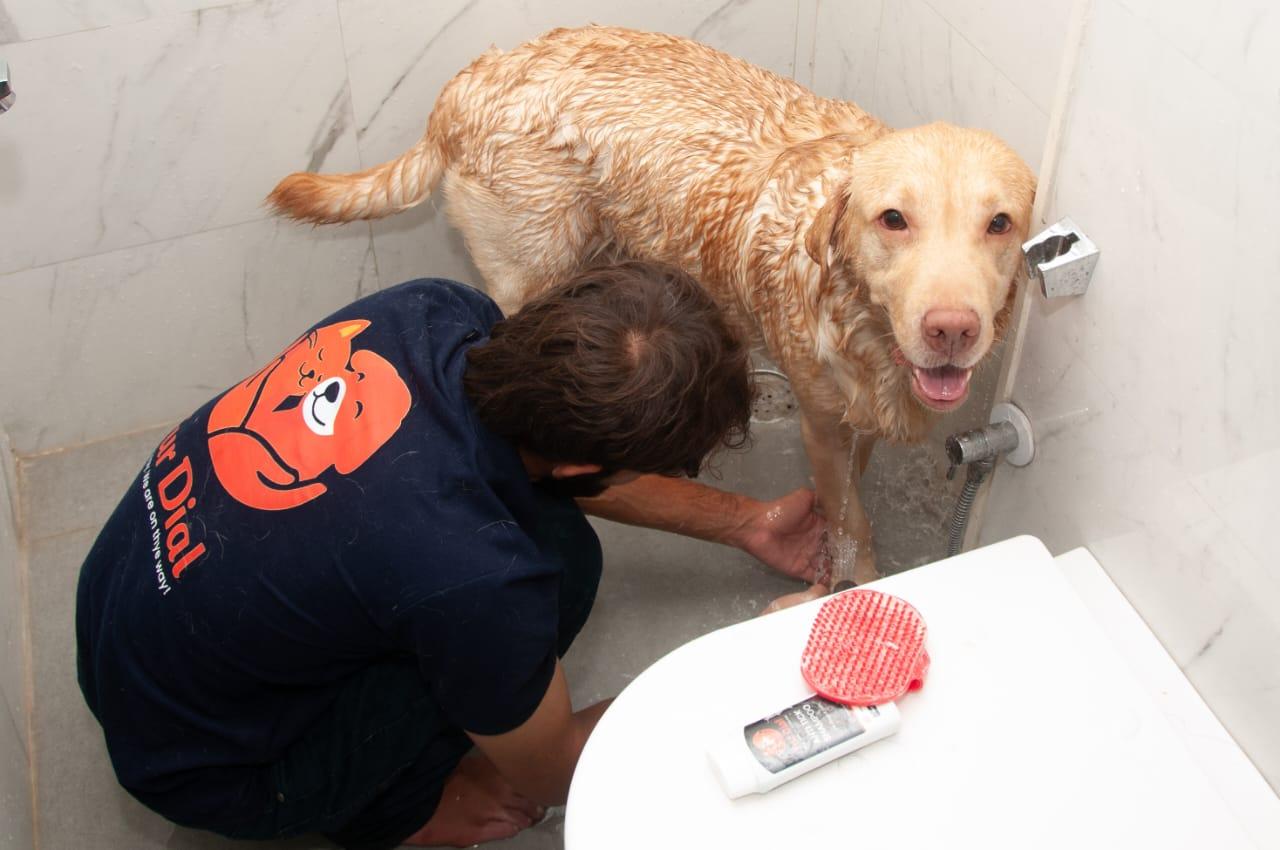
Step 6: Bathing
Once the coat preparation and initial hygiene steps are complete, it's bath time.
The groomer wets the coat, applies an appropriate dog shampoo, gently works it through the fur, and rinses thoroughly.
Areas such as the paws, belly, legs, and underside may need extra attention, depending on how dirty the dog is.
Thorough rinsing is especially important because shampoo left behind can irritate the skin.
The water should be at a comfortable temperature, and care should be taken around the eyes, ears, and nose.
Professional grooming products should be intended for dogs. Human shampoo is not an appropriate substitute for routine dog bathing.

Step 7: Blow-Drying
After bathing, the groomer removes excess water and begins drying the coat.
Drying is more than a finishing touch. It helps prepare the coat for brushing, inspection, and trimming.
The drying technique should suit your dog's coat and tolerance. Appropriate airflow, temperature, and careful handling are important.
Some dogs are unfamiliar with dryer noise and may initially become restless. If your dog is sensitive to loud sounds, tell the groomer beforehand.
The goal is to dry the coat carefully without causing unnecessary discomfort.
Step 8: Haircut or Trimming
Once your dog's coat is appropriately dry, the groomer moves on to haircutting or trimming, according to the booked service.
The amount of trimming varies by breed, coat type, and your preferences.
Some dogs need a more extensive haircut, while others may only require light trimming around areas such as the paws or sanitary region.
Discuss the desired appearance before the session begins. If you have a particular haircut in mind, you can show the groomer a reference photograph.
Keep in mind that not every haircut is suitable for every coat type. The groomer should explain if your requested style needs adjustment based on coat condition or grooming safety.
Step 9: Final Brushing and Check
The final stage is a finishing check.
The groomer goes over the coat, checks the trimmed areas, and looks for any remaining loose hair or uneven sections that need attention.
This is also a useful time to ask questions about maintaining your dog's coat between grooming appointments.
For example, you can ask which brush suits your dog, how often brushing may be needed, or which areas tend to develop tangles. For how often a dog needs a full groom, see how often to groom a Golden Retriever or Shih Tzu.
Once the final check is complete, your dog's grooming session is finished.
What Does a Dog Groomer Need at Home?
Preparing for an at-home grooming appointment is straightforward. You don't need to turn your home into a grooming salon, but the groomer does need a practical place to work.
The three main requirements are:
Bathroom or balcony space: a suitable area where the groomer can work and your dog can be handled comfortably
Water access: a nearby water source for bathing and rinsing
Electrical plug point: an accessible socket for equipment such as the grooming dryer
Before the appointment, clear away unnecessary objects and make sure the working area is reasonably free from distractions.
It also helps to keep your dog's favourite toy and some suitable treats nearby.
Let the groomer know about any skin sensitivities, previous grooming difficulties, or veterinary instructions that may affect the appointment.
If you're unsure whether your bathroom or balcony has enough room, confirm the setup requirements with the grooming provider before booking.
How Long Does Dog Grooming Take at Home?
A complete dog grooming session at home usually takes around 90 to 120 minutes.
However, this is an approximate duration rather than a fixed timeline for every dog.
Several factors can affect the time required:
Size: A larger dog may take longer to bathe and dry.
Coat type: Thick, dense, or long coats can require additional brushing and drying.
Coat condition: Tangled or matted fur may need extra attention.
Temperament: A nervous or restless dog may require a slower approach.
Services booked: A full haircut can take longer than basic hygiene and bathing.
To see what each package includes, look at our grooming packages, and for prices, see what dog grooming costs in Mumbai.
For your first appointment, it's sensible to keep your schedule flexible rather than arranging something immediately afterward.
Allow the groomer to work at a pace appropriate for your dog's comfort and grooming needs.
Can You Stay With Your Dog During Grooming?
Yes, you can stay with your dog during an at-home grooming session.
For first-time pet parents, being able to remain nearby is one of the practical advantages of having the appointment at home.
You can observe the process, answer the groomer's questions, and help them understand your dog's usual behaviour.
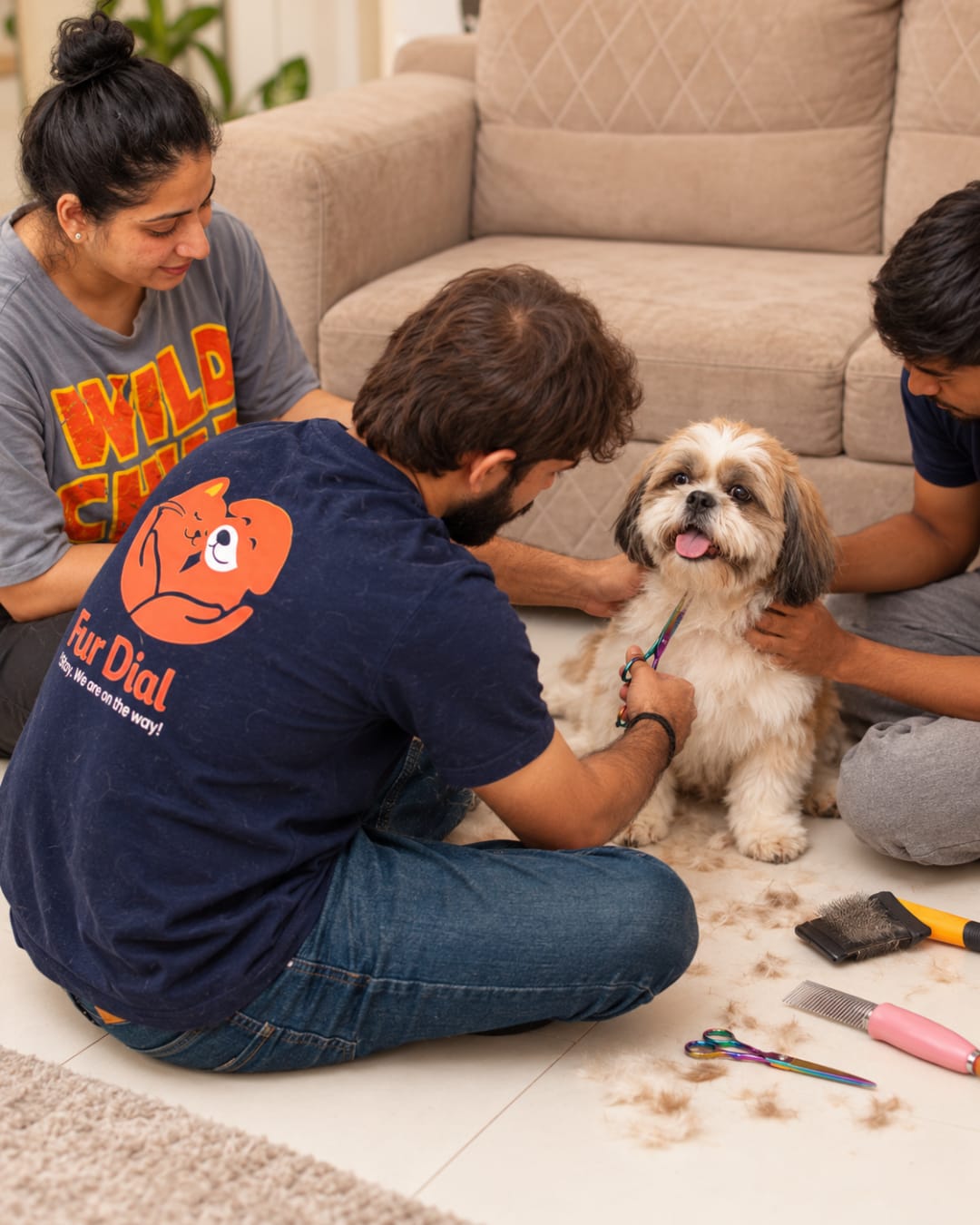
However, staying nearby doesn't necessarily mean interacting with your dog throughout the entire session.
Some dogs settle well when their parent is present. Others may become distracted, repeatedly turn around, or try to move towards them.
Follow the groomer's guidance on where to sit or stand, and avoid interrupting steps that require your dog to remain still, such as nail trimming or haircutting.
Your presence should support a calm environment, not make the groomer's work more difficult.
What If Your Dog Is Nervous During Grooming?
Not every dog enjoys being brushed, bathed, or handled by someone unfamiliar. This is especially relevant during a first professional grooming session.
Your dog may hesitate to enter the bathing area, pull a paw away during nail trimming, or react to the sound of the dryer.
Tell the groomer about these behaviours before the appointment begins.
Familiar toys and suitable treats may be useful for positive reinforcement, provided the groomer agrees and the treats are safe for your dog.
In certain situations, a groomer may consider a properly fitted muzzle as a temporary safety measure. A muzzle should never be treated as a routine requirement, a punishment, or a reason to force a frightened dog through grooming. Any use should be discussed with you, be appropriate for the dog, and allow safe breathing and panting.
If your dog is showing significant fear or distress, the safer approach may be to pause, modify, or end the session rather than continue by force.
For dogs with ongoing handling difficulties, ask your veterinarian about a gradual grooming preparation plan.
How Can You Prepare Your Dog for Their First Grooming Session?
A little preparation can make the appointment easier for everyone involved.
Before the groomer arrives:
Give your dog a toilet break. This can help avoid interruptions once the session begins.
Prepare the grooming space. Keep the bathroom or balcony accessible, with water and electricity available.
Keep familiar items nearby. Have your dog's favourite toy and a few appropriate treats ready.
Share important information. Tell the groomer about sensitive areas, skin concerns, previous reactions, or anything that makes your dog uncomfortable.
Allow time for the appointment. Plan around the expected 90 to 120 minute session without rushing.
You can also gently familiarise your dog with ordinary handling between appointments, such as touching the paws or brushing for short periods.
Keep these interactions positive and stop if your dog becomes uncomfortable.
When Can a Puppy Have Its First Groom?
Only vaccinated pets are eligible for grooming.
Ask your veterinarian when your puppy is old enough and ready for its first professional grooming session.
Final Thoughts
Understanding the dog grooming process before your first appointment helps you prepare the right space, know what each stage involves, and communicate your dog's needs to the groomer.
From the initial coat check to bathing, drying, and the final trim, each step has a purpose. Your main responsibility is to provide a suitable working area, share relevant information about your dog, and help maintain a calm environment.
FurDial offers dog grooming at home, so you can stay nearby throughout the appointment. Our FAQ answers other common questions, and you can book a groom at home whenever you're ready.
For your first session, focus on preparation, clear communication, and your dog's comfort. A successful grooming appointment is about appropriate care and handling, not simply finishing as quickly as possible.