
Mumbai winters may not bring freezing temperatures, but cooler mornings and seasonal changes can still affect how you care for your dog's coat and skin. And if you're a working professional balancing office hours, commutes and everyday responsibilities, keeping up with grooming can sometimes feel like another task on an already packed schedule.
The good news? Dog grooming in winter doesn't have to be complicated. Your dog can continue enjoying baths, brushing and regular grooming throughout the season. The important part is choosing the right bathing frequency, using suitable products and ensuring your dog is completely dry afterwards.
Here's what Mumbai pet parents should know about keeping their dogs clean, comfortable and well-groomed during winter.
Should You Bathe Your Dog During Mumbai's Winter?
Yes, dogs can safely be bathed in winter. You don't need to stop bathing your dog simply because the weather becomes cooler.
The key is to use comfortably warm water, avoid chilly bathing conditions and dry your dog's coat thoroughly.
According to [VCA Animal Hospitals](https://vcahospitals.com/know-your-pet/grooming-and-coat-care-for-your-dog), a dog's bathing needs depend on factors such as coat type, lifestyle, age and skin health.
For Mumbai pet parents, this means you should consider your dog's daily activities rather than following a strict winter bathing calendar.
A dog that regularly visits parks, plays outdoors or gets dirty during walks may need bathing more often than one that spends most of its time indoors.
But there is one important precaution: avoid leaving your dog damp after a bath, particularly during cooler mornings and evenings.
How Often Should You Bathe Your Dog in Winter?
There's no universal bathing schedule that works for every dog.
Some dogs need occasional bathing when they become dirty or develop an odour, while others require regular coat maintenance or a veterinarian-recommended bathing routine.
Factors that influence bathing frequency include:
- Coat type: Long-haired and double-coated dogs may require more extensive brushing, rinsing and drying.
- Activity level: Dogs that spend time outdoors may accumulate dirt faster than primarily indoor pets.
- Skin condition: Dogs with allergies, irritation or other skin problems may need a specific bathing schedule recommended by a veterinarian.
- Grooming habits: Regular brushing can help remove loose fur and surface debris between baths.
Avoid bathing your dog excessively just because their coat looks slightly dusty. Frequent bathing with unsuitable products can contribute to skin and coat dryness.
For busy pet parents, a practical approach is to maintain simple brushing and paw-cleaning habits between appropriately scheduled baths.
If you aren't sure how frequently your dog needs a bath, ask your veterinarian or a qualified groomer familiar with your dog's coat type.
How to Bathe and Dry Your Dog Safely in Winter
Bathing is only one part of the grooming process. Proper drying matters just as much, especially for thick-coated dogs.
The [American Kennel Club](https://www.akc.org/expert-advice/health/how-to-groom-a-dog/) recommends using warm water, dog-specific shampoo and thorough rinsing, followed by suitable drying methods.
1. Choose a Comfortable Bathing Environment
Bathe your dog indoors in a comfortably warm, draft-free space.
Avoid cold-water baths or bathing outdoors during cooler weather. Test the water before starting to ensure it feels comfortably warm, not hot.
Keep towels and grooming supplies ready so your dog doesn't have to remain wet while you search for them.
2. Brush Before Bathing
Brush your dog's coat gently before getting it wet.
This helps remove loose hair and identify tangles that may become harder to manage after bathing.
Pay attention to areas behind the ears, under the legs and around the collar, where knots can develop.
If you find severe matting, consult a professional groomer rather than attempting to cut it out with scissors.
3. Use a Dog-Specific Shampoo
Human shampoos, including baby shampoos, aren't appropriate substitutes for products formulated for dogs.
Choose a gentle, dog-specific shampoo suitable for your pet's coat and skin.
If your dog has sensitive skin or a diagnosed skin condition, ask your veterinarian which products to use.
Rinse thoroughly so shampoo residue doesn't remain on the skin.
4. Dry the Coat Completely
Start with a clean, absorbent towel to remove excess water.
Depending on your dog's coat type and tolerance, a pet-safe dryer may help complete the process. Use controlled airflow and a comfortable temperature, keeping the dryer moving rather than concentrating heat on one area.
Pay particular attention to thick fur and the undercoat, which may remain damp even when the outer coat feels dry.
The [American Kennel Club's dog-drying guidance](https://www.akc.org/expert-advice/health/dry-your-dog/) explains why thorough drying matters for preventing tangles and maintaining skin and coat health.
If your dog becomes anxious around dryers or dislikes handling, don't force the process. Seek help from a groomer experienced in low-stress handling.

Your dog's actual grooming needs may vary even within the same breed.
For example, a thick-coated dog may need more drying time than a short-haired dog, while a long-haired dog may need more attention to knots and tangles.
Regular grooming also gives you an opportunity to notice changes in your dog's skin, coat or general comfort.
Signs Your Dog's Skin Needs Extra Attention
Some dogs experience dry or irritated skin during seasonal changes.
According to [VCA Animal Hospitals](https://vcahospitals.com/st-marys/know-your-pet/coat-and-skin-appearance-in-the-healthy-dog), dry winter conditions can contribute to skin irritation in some dogs. However, itching and flaky skin can also have other causes.

If these symptoms appear, avoid experimenting with home remedies or repeatedly switching shampoos.
A veterinarian should assess persistent itching, redness, hair loss or suspected skin infections. Professional grooming supports routine hygiene but doesn't replace veterinary diagnosis or treatment.

Why Professional Dog Grooming Makes Sense for Busy Mumbai Pet Parents
For many working professionals, the difficult part of grooming isn't knowing that their dog needs a bath. It's finding enough time to do the job properly.
Washing, brushing, rinsing and drying can require considerable effort, especially with large dogs, thick coats or pets that are uncomfortable during baths.
Professional grooming can be a practical option when you'd rather spend your free time enjoying your pet's company than cleaning up after bath time.
A suitable grooming session may include bathing, coat brushing, drying, nail trimming and other hygiene services, depending on the groomer's offerings.
Professional grooming can be especially useful when:
- Your dog has a thick or difficult-to-maintain coat.
- You find it challenging to dry your pet thoroughly at home.
- Your dog becomes restless during grooming.
- Your work schedule makes regular coat maintenance difficult.
- You need help managing loose hair or minor tangles before they become severe mats.
Before booking, ask how the groomer handles nervous pets, what products they use, how they dry different coat types and which services are included.
For Mumbai pet parents looking for a more convenient option, FurDial can be considered as part of a regular grooming routine, subject to service availability and your dog's individual needs.
The aim is to make grooming manageable without compromising your pet's comfort.
A Simple Winter Grooming Routine for Busy Pet Parents
Even if you prefer professional grooming, a few small habits at home can help keep your dog comfortable between appointments.
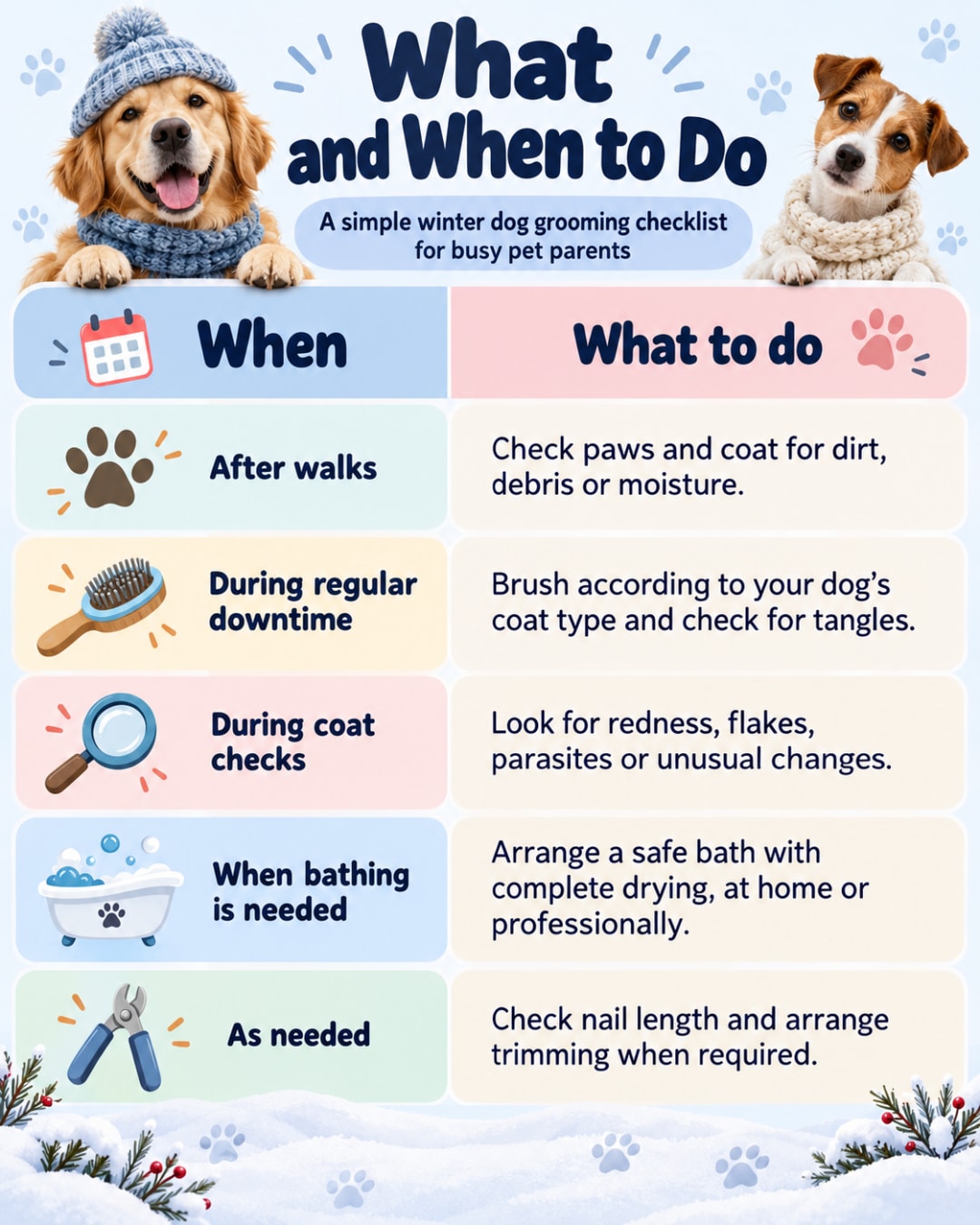
This isn't a fixed medical or grooming schedule. Adjust the routine according to your dog's breed, coat condition, health and lifestyle.
The goal is consistency, not spending hours on grooming every week.
Keep Your Dog Comfortable, Without Complicating Your Schedule
Mumbai's mild winter doesn't mean your dog needs an entirely new grooming routine.
Most dogs can continue their usual grooming habits with a little extra attention to bathing conditions, suitable shampoos, coat maintenance and thorough drying.
And if handling the entire process at home feels inconvenient, professional grooming can help you maintain a consistent routine.
Because good grooming should keep your dog comfortable and healthy, while fitting naturally into your everyday life.